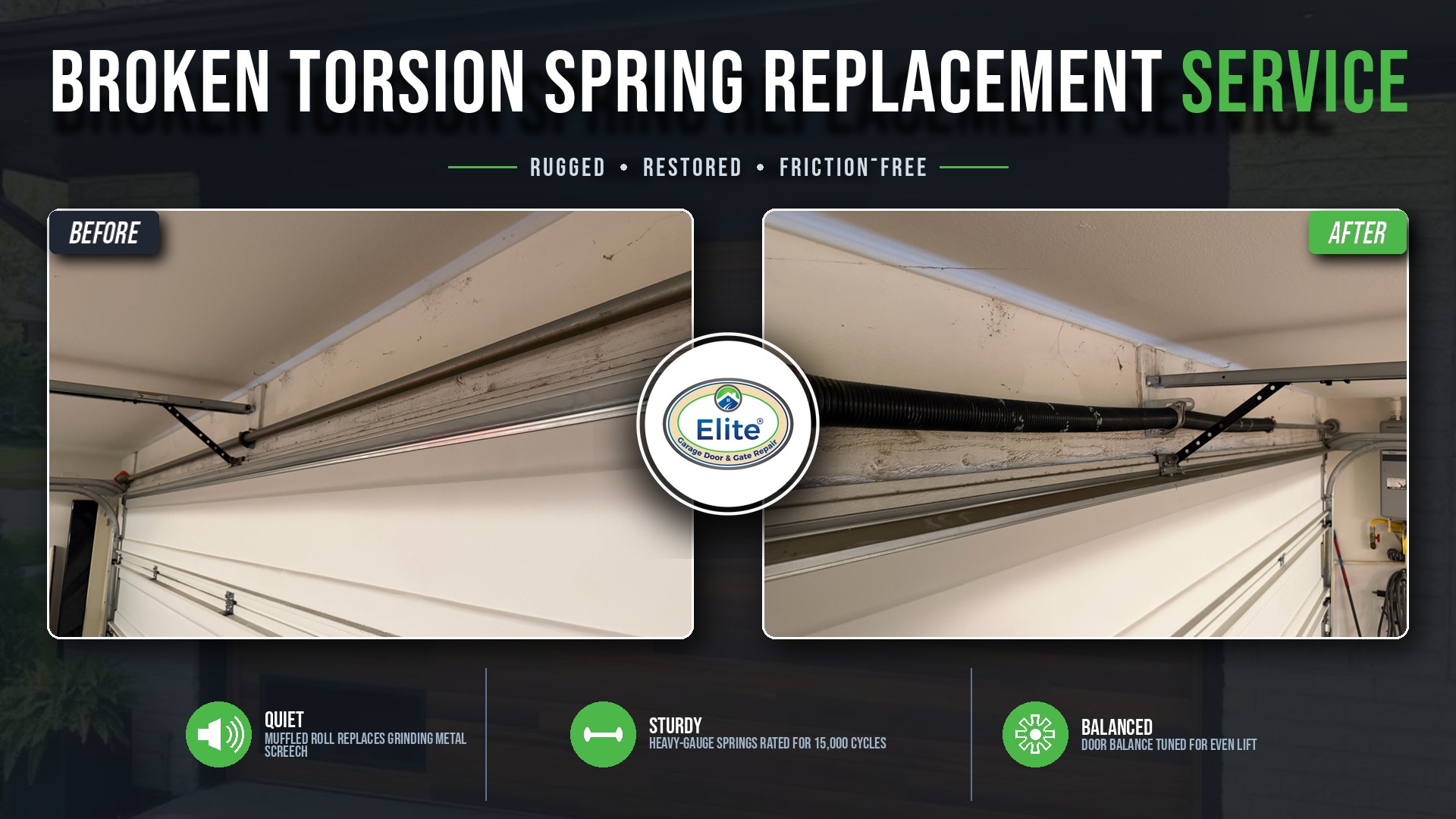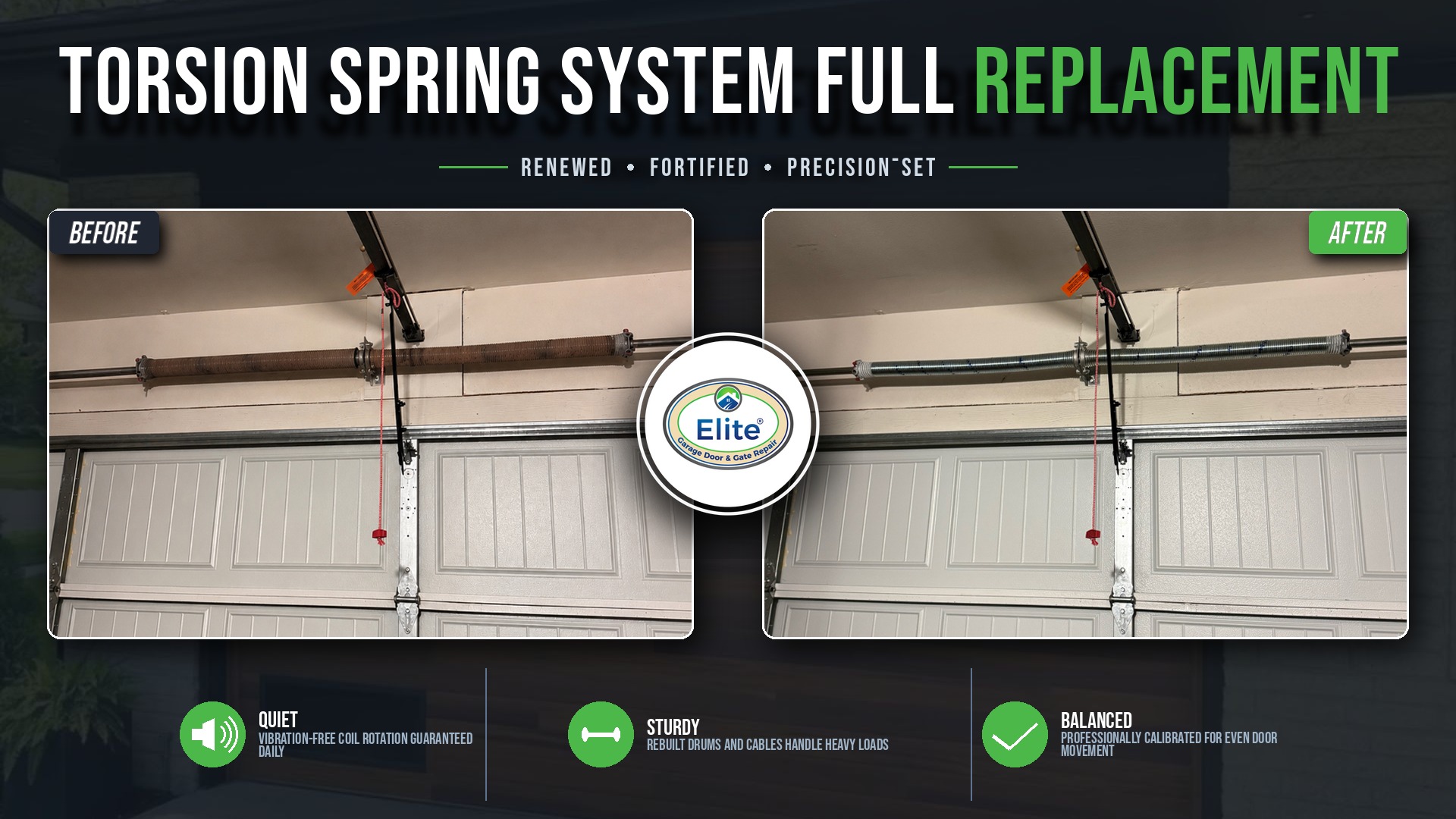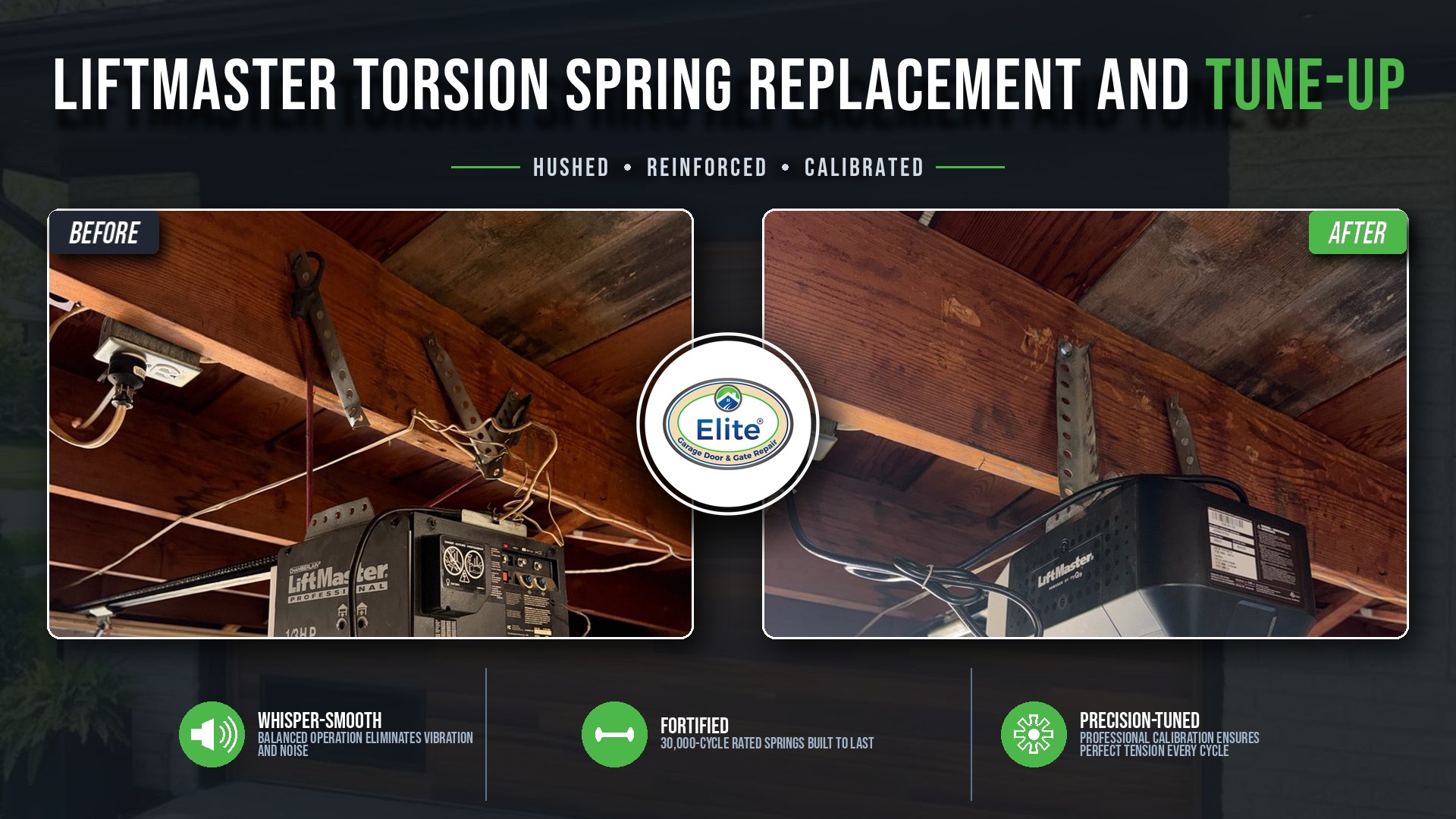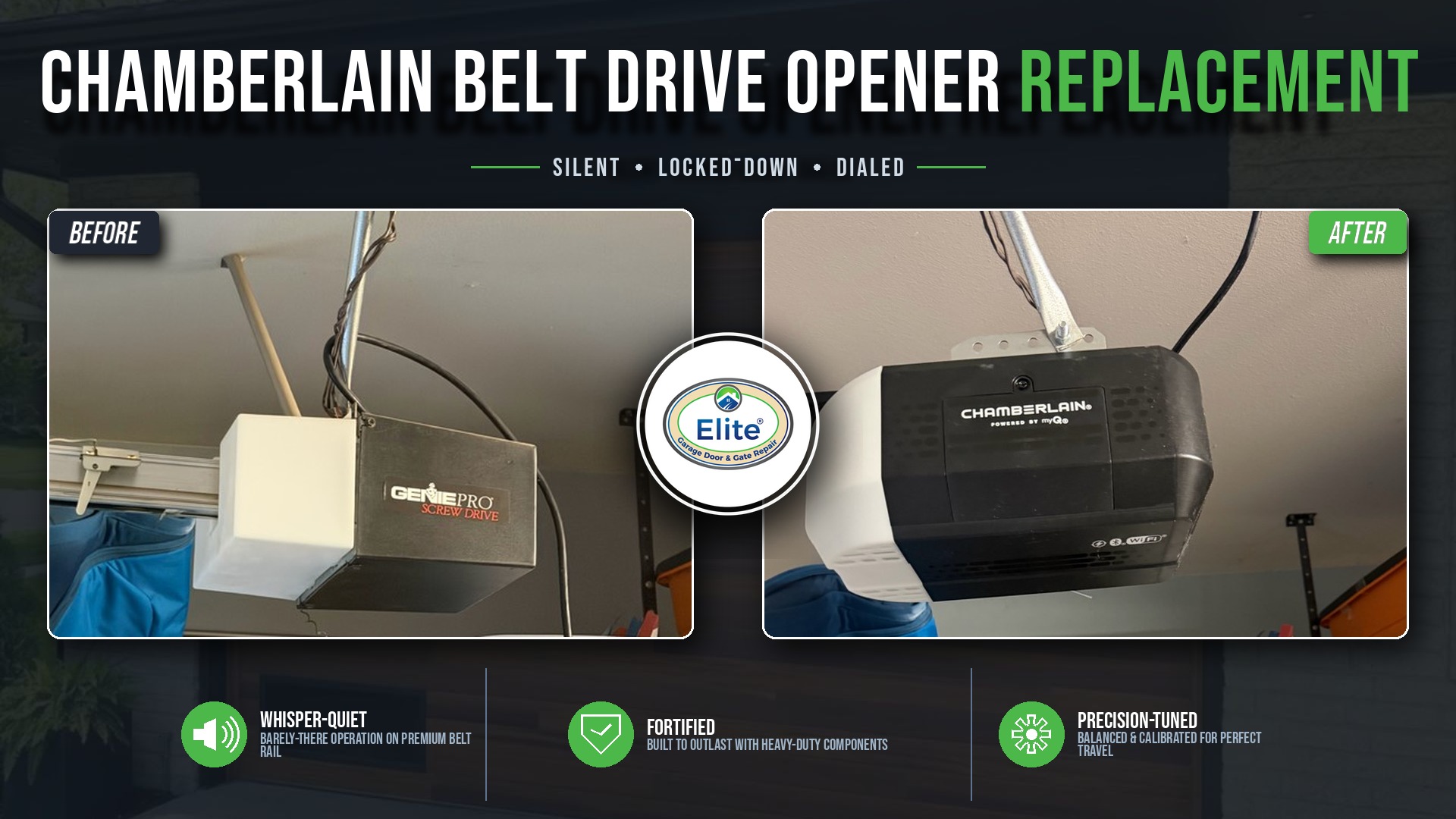

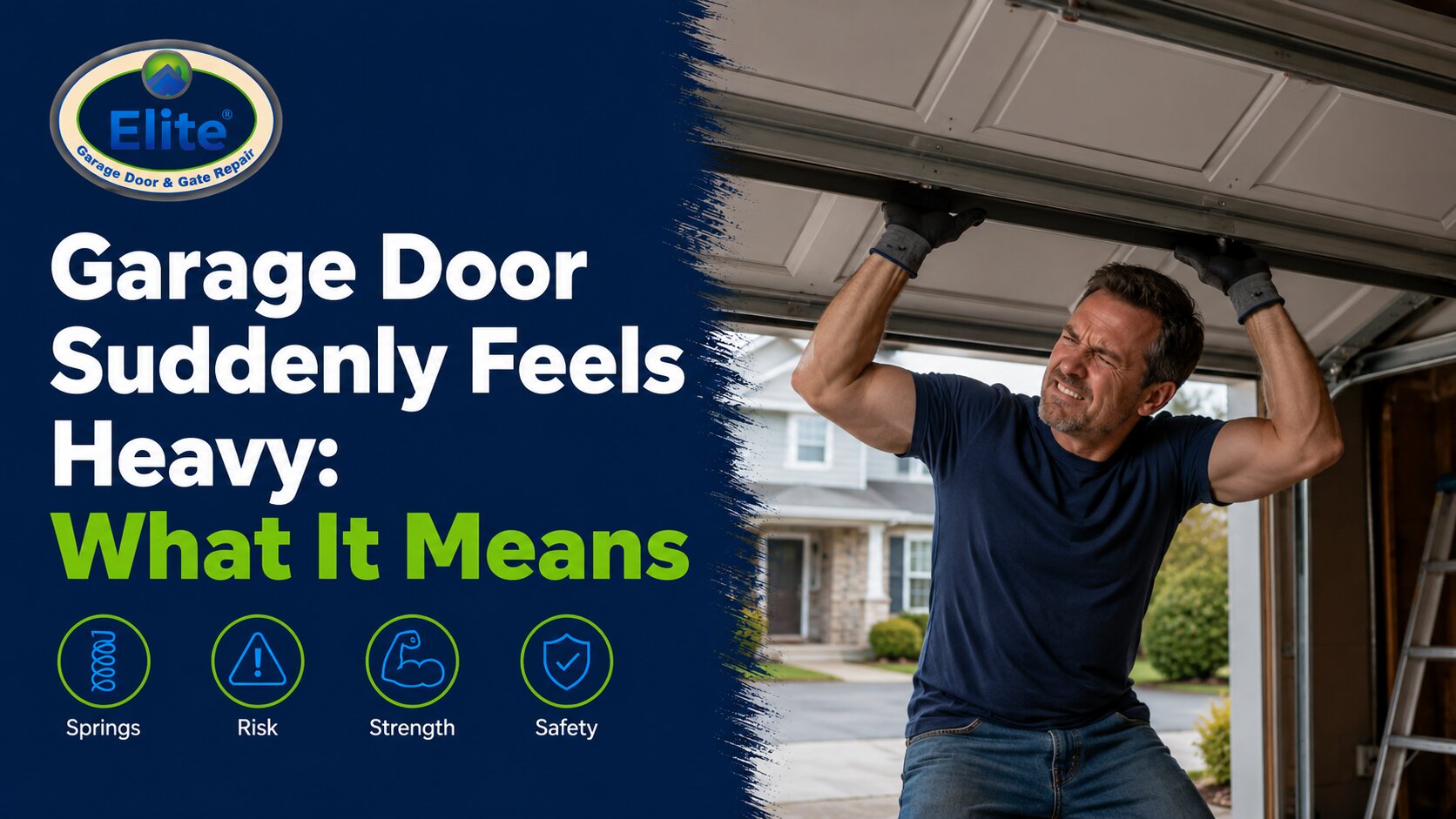
A garage door that suddenly feels heavy is one of the clearest warning signs something is wrong. Many homeowners notice it when trying to lift the door manually or when the opener sounds strained and struggles more than usual. Because the door may still move, it is easy to assume the issue is minor. In reality, a heavy garage door almost always points to a serious mechanical imbalance.
Garage doors are designed to feel light when lifted. If that changes, the system is no longer working the way it should. Understanding why a garage door feels heavy and what that means can help you avoid damage, safety risks, and unexpected breakdowns.
A properly functioning garage door is counterbalanced by springs. These springs do most of the work, allowing the door to be lifted with minimal effort. The opener is not designed to lift the full weight of the door by itself.
When a garage door suddenly feels heavy, it means the counterbalance system is failing. The opener may still move the door for a short time, but it is working far beyond what it was designed to handle.
The Most Common Reasons a Garage Door Feels Heavy
How a Heavy Garage Door Affects the Opener
Garage door openers are designed to guide movement, not lift weight. When the door becomes heavy, the opener compensates by working harder.
Over time, this extra strain can lead to motor wear, gear damage, or complete opener failure. What starts as a spring or cable issue can quickly turn into an opener replacement if ignored.
If your opener sounds louder or slower than usual, that is often a direct result of the door becoming too heavy.
When a Heavy Door Becomes a Safety Risk
If springs or cables fail completely, the door can drop suddenly. This creates a serious risk for vehicles, property, pets, and people nearby. Attempting to manually lift a heavy door can also cause injury.
If you are unsure whether the door is safe to use, this guide explains when it is best to stop and call for help: When To Call A Professional For Garage Door Repair
Can You Still Use a Garage Door That Feels Heavy
Using a garage door that feels heavy is not recommended. Even if the door still opens and closes, the system is no longer operating safely.
Continued use increases the risk of additional component failure and can turn a manageable repair into an emergency situation. The safest choice is to stop using the automatic opener and have the system inspected.
How Professionals Diagnose a Heavy Garage Door
What Homeowners Often Ask About Heavy Garage Doors
One common question is whether a heavy door can be safely closed manually. The answer depends on the condition of the system and the severity of the imbalance.
This FAQ explains how and when it may be possible to close a garage door manually: Manually Close Garage Door
How to Reduce the Risk of This Problem Happening Again
Regular inspections and maintenance help catch spring and cable wear early. Addressing small issues before complete failure keeps the system balanced and reduces stress on the opener.
Ignoring early signs, such as increased resistance or unusual noise, is the most common reason a heavy door turns into a full system failure.
Final Thoughts
A garage door that suddenly feels heavy is one of the clearest indicators of a balance problem. Springs, cables, and related components are no longer supporting the door properly, and continued use can be unsafe.
Addressing the issue early helps protect the opener, prevents sudden failure, and restores smooth, safe operation. When in doubt, stopping the door and scheduling professional inspection is always the safest choice.