Most homeowners do not know what type of springs they have until the garage door starts acting up. A loud bang, a door that suddenly feels heavy, or an opener that struggles is usually what triggers the question. Are these torsion springs or extension springs, and does it matter for safety, cost, and how the door should be repaired?
It matters a lot. Torsion and extension springs both exist for the same purpose, to counterbalance the weight of the garage door, but they do it in very different ways. The design affects how smoothly the door operates, how the system fails, how long it typically lasts, and what type of repair is needed when something goes wrong.
Understanding the difference is useful even if you are not planning to repair anything yourself, because it helps you recognize warning signs, understand estimates, and make smarter decisions when you replace springs.
How Each Spring Type Works In Simple Terms
Both systems store energy to help lift the door. The difference is where the energy is stored and how it is applied.
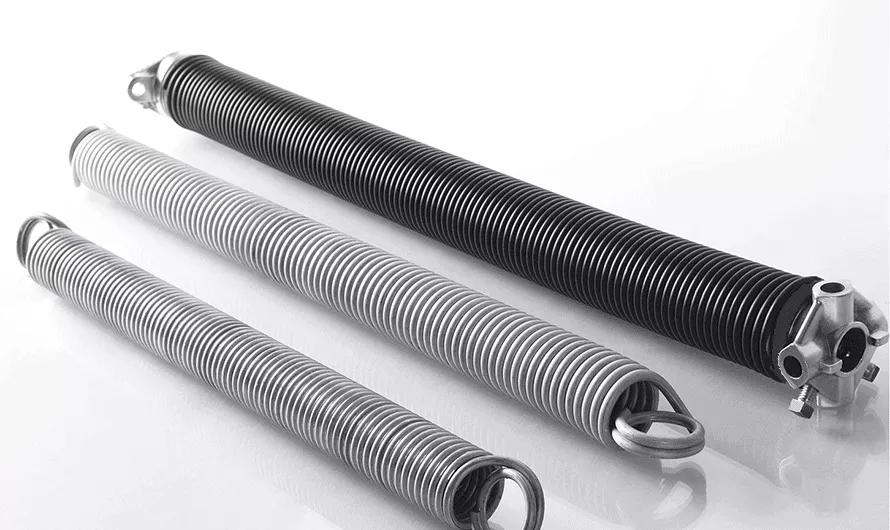
Torsion springs are mounted above the garage door opening on a metal shaft. As the door closes, the torsion spring winds tighter, storing energy. As the door opens, the spring unwinds and releases that energy in a controlled way. The force is transferred through the shaft, drums, and cables, lifting the door evenly from both sides.
Extension springs are typically mounted along the sides of the door, parallel to the horizontal tracks. As the door closes, the springs stretch, storing energy. As the door opens, the springs contract and pull upward to help lift the door.
The key difference is that torsion springs apply torque through a central shaft, while extension springs pull with tension along each side.
If you want a service reference for spring work on your system, this is the most direct internal link: Garage Door Spring Repair
How A Two Spring System Changes Performance And Safety
Which System Is Safer And Why
In most modern residential setups, torsion springs are considered the safer and more controlled design. That is because the torsion spring is mounted on a shaft and the energy is distributed through the system in a way that typically produces smoother movement.
Extension springs can be safe when installed correctly with containment cables, but they are more exposed and can create more movement on the sides of the door. If an extension spring breaks without proper safety containment, it can whip or fly, which is why containment cables are a critical part of extension spring safety.
Torsion springs can also be dangerous, but in a different way. They store a large amount of energy on the shaft, and improper handling during winding or unwinding can cause severe injury. This is why spring replacement should be handled by professionals.
To understand why spring work is not a DIY task, this article explains the risk clearly: Why You Should Never Replace Springs Yourself
Performance Differences Homeowners Actually Feel
Most homeowners care about one thing, how the door behaves day to day. In that area, torsion springs generally provide smoother, quieter, more balanced operation. Because torsion systems lift through drums and cables on a shaft, the door tends to move evenly and predictably.
Extension spring systems can feel a little less smooth, especially as they age. Because the springs are stretching and contracting along the tracks, they can introduce more vibration, bounce, or uneven lifting if one side wears differently than the other. When extension systems begin to fail, homeowners often notice that the door feels less stable or starts to move unevenly.
This does not mean extension springs are always bad. Many older doors still operate fine with extension systems. It simply means torsion systems tend to be the standard choice today because of stability and consistent performance.
Common Failure Signs And What They Usually Mean
Both systems can fail from wear, but their warning signs can look different.
With torsion springs, homeowners often hear a loud bang when the spring breaks, and they may see a visible gap in the coil above the door. The door often becomes extremely heavy immediately.
With extension springs, the break may be more obvious on the side of the door. One side might lift differently than the other, and the door may hang crooked or bind in the track.
In both cases, the most common symptom is the same. The door feels heavy, the opener strains, and the door may stop moving properly.
If you want a clear checklist of spring failure symptoms, this guide is helpful: 9 Signs Broken Garage Door Springs
Another important point is that spring failure often stresses the opener. If you suspect your opener has been struggling because of spring issues, you may need this service page: Garage Door Opener Repair
Common Failure Signs And What They Usually Mean
Cost And Upgrade Considerations
Cost varies based on door size, spring size, and whether one or two springs are replaced, but there is also a practical upgrade question here. Many homeowners with older extension spring systems eventually ask whether they should convert to torsion springs.
Conversion can be a good idea in some situations, especially if the door is heavy, the system is frequently used, or the existing setup has recurring issues. Torsion systems often provide more consistent balance and can reduce strain on the opener over time.
However, conversion is not automatically necessary. A properly installed extension system with containment cables can still operate safely. The right decision depends on door type, headroom clearance, current hardware condition, and overall cost.
If your door is already showing wear, routine Garage Door Maintenance can help reduce stress on the spring system and improve long-term reliability, regardless of which spring type you have.