

Over the years working with homeowners across Seattle and the Puget Sound region, I’ve learned that choosing the right insulated garage door isn’t just about picking the highest R-value on the spec sheet. It’s about matching your insulation needs to how you actually use your garage and what our Pacific Northwest climate demands from your home.
With energy costs rising and Washington homeowners looking for practical ways to reduce heating bills, I’m sharing what really matters when selecting an insulated garage door for energy savings in our region.
For attached garages in King County, I recommend garage doors with an R-value between 13 and 18 for meaningful energy savings. This range provides solid thermal protection without the premium cost of ultra-high insulation that often doesn’t deliver proportional returns in our mild climate.
If your garage is detached or unheated, a lower R-value of 8 to 12 usually makes more sense financially. The energy savings won’t justify the higher upfront cost when the space isn’t directly connected to your home’s heating system, which is why understanding How To Choose The Best Garage Door For Your Detached Garage is important for making the right investment.
Polyurethane vs Polystyrene: Which Insulation Type Works Better?
I install both types regularly, and each has clear advantages. Polyurethane foam insulation is injected between the door panels and expands to fill every gap, creating better thermal efficiency and adding structural strength to the door itself.
Polystyrene panels are less expensive and still provide good insulation, but they’re inserted as pre-cut boards that can leave small air gaps. For homes in Bellevue, Kirkland, or Redmond where you’re heating an attached garage workspace, I usually recommend polyurethane for the better performance.
Steel Doors with Thermal Breaks Save More Than You’d Think
The best insulated garage doors I install include thermal breaks, which are non-conductive materials separating the interior and exterior steel layers. Without this feature, the metal itself conducts cold directly through the door, reducing your actual thermal performance significantly.
When I measure garage temperatures in Seattle homes during winter, doors with thermal breaks consistently maintain 10 to 15 degrees warmer interior temperatures compared to doors without them. That difference directly impacts your home’s heating costs if you have living space above the garage, making it worthwhile to explore options when considering a New Garage Door installation.
How Weatherstripping Quality Affects Your Energy Savings
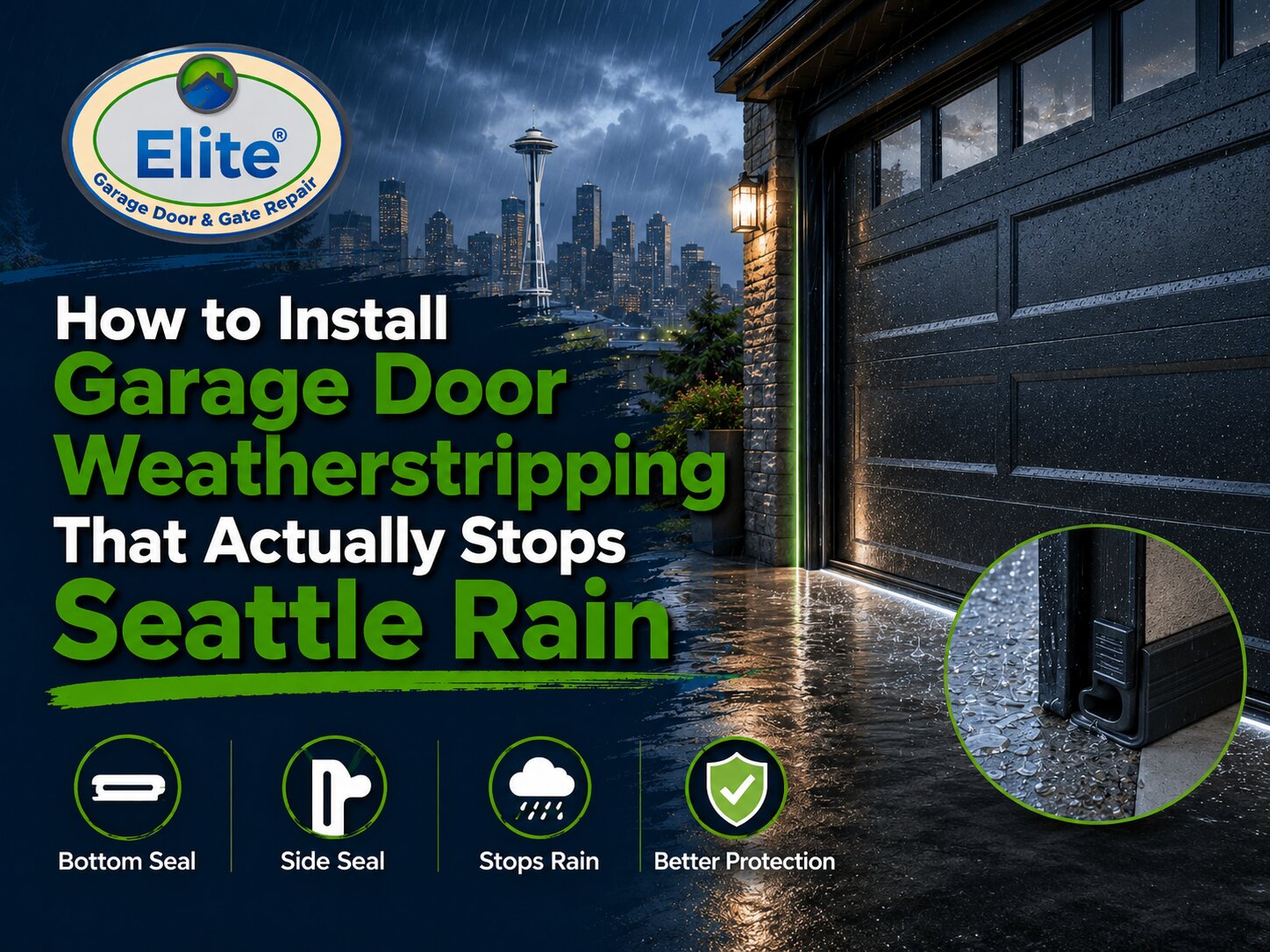
I’ve seen expensive, well-insulated doors lose efficiency because of poor weatherstripping. The seals around your door perimeter and between panel sections matter just as much as the core insulation for preventing air infiltration.
In our wet Washington climate, I always check that weatherstripping is vinyl or EPDM rubber rated for temperature fluctuations and moisture resistance. These materials last longer in the Pacific Northwest rain and maintain their seal better than cheaper alternatives, and proper installation with attention to Garage Door Safety ensures optimal performance.
Bottom seals are especially important. I recommend bulb-style or T-style seals that compress against uneven garage floors, which are common in older Seattle neighborhoods like Ballard and Fremont.
Insulated Doors Reduce Noise as a Bonus Benefit
Beyond energy savings, our team notices that homeowners with insulated garage doors appreciate the noise reduction. If you’re converting garage space into a workshop or home gym, the insulation dampens street noise and keeps your activities quieter for neighbors.
This matters more in densely populated areas throughout Seattle where homes sit close together. The same insulation blocking heat transfer also absorbs sound transmission effectively.
Getting the Right Insulated Door for Your Home
Choosing an insulated garage door for energy savings requires balancing upfront cost against long-term utility reduction and comfort improvements. In my experience serving King County homeowners, the sweet spot is a polyurethane-insulated steel door with thermal breaks and quality weatherstripping in the R-13 to R-16 range for attached garages, and understanding the differences between Single Panel Vs Sectional Garage Doors can help you make the best choice for your home’s design.
If you’d like help evaluating which insulation level makes sense for your specific situation, our team at Elite Garage Door & Gate Repair is always available to assess your garage setup and recommend options that deliver real energy savings without overspending.