

Over the years working with homeowners across Seattle, I’ve found that most people don’t realize their garage door safety sensors might not be working properly until something goes wrong. These small devices mounted near the floor on each side of your garage door are critical safety features that prevent the door from closing on people, pets, or objects.
Testing your sensors takes just a few minutes, and I always recommend doing it monthly. In this guide, I’ll walk you through exactly how we test sensors during our service calls, so you can do the same at home.
What Do Garage Door Safety Sensors Actually Do?
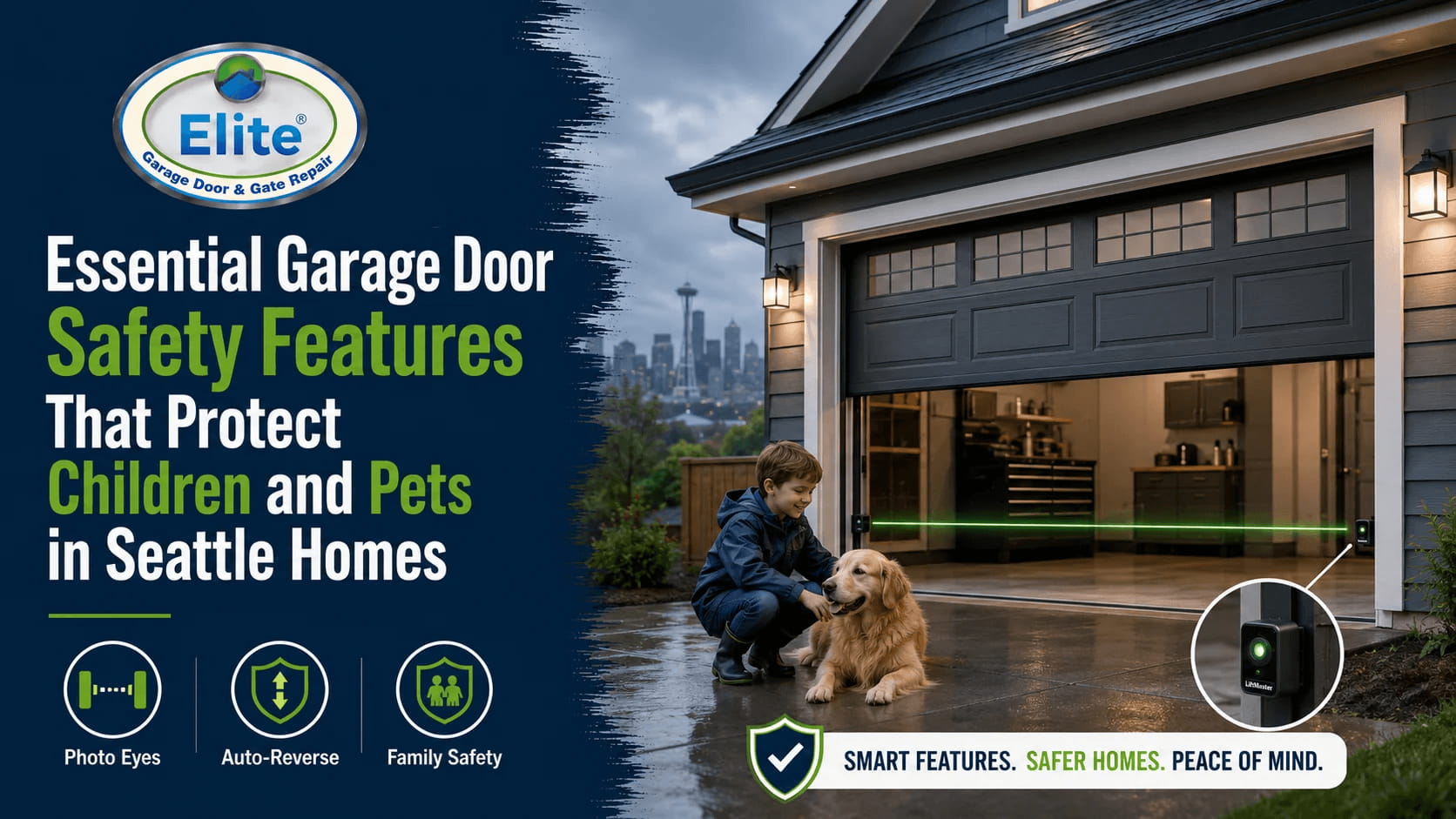
Safety sensors (also called photo eyes) send an invisible beam across the garage door opening. If anything breaks that beam while the door is closing, the door immediately reverses to prevent injury or damage.
Federal law has required these sensors on all garage door openers manufactured since 1993. If your opener is older than that and lacks sensors, it’s time for an upgrade for your family’s safety. Learn more about Garage Door Safety features and requirements.
The Basic Box Test: Your First Check
The simplest way to test your sensors is with a cardboard box or similar object. Place the box in the path of the closing door, right where the sensor beam crosses (usually about 4 to 6 inches off the ground).Press your wall button or remote to close the door. The door should reverse immediately when it detects the box blocking the sensor beam. If the door continues closing and hits the box, your sensors are not functioning properly.
This is the exact test I perform on every service call in neighborhoods from Ballard to West Seattle. It’s quick, safe, and tells you immediately if there’s a problem.
Visual Inspection: What to Look For
Most sensors have small LED lights that indicate their status. Typically, you’ll see a green or red light on each sensor unit.
Check for spider webs, dirt, or moisture on the sensor lenses. In the Pacific Northwest, our damp climate means sensors can accumulate grime that interferes with the beam. I’ve cleaned countless sensors in Seattle garages where a simple wipe with a clean cloth solved the problem. Regular maintenance like this is part of How To Make Your Garage Door Last Longer.
Are My Sensors Misaligned or Broken?
The Door Won’t Close at All: Is It the Sensors?
Yes, faulty sensors will prevent your garage door from closing completely. This is a safety feature, not a malfunction.
If your door refuses to close or reverses immediately after you press the button, the sensors think something is blocking the path. Check for obstructions, clean the sensor lenses, and verify alignment as described above.
Some homeowners in areas like Queen Anne and Capitol Hill have discovered that direct sunlight hitting the sensors at certain times of day can interfere with operation. If this happens consistently, we can relocate or shield the sensors during installation of A New Garage Door system.
How Often Should You Test Your Sensors?
I recommend testing your sensors monthly, especially if you have children or pets. It takes less than a minute and could prevent a serious accident.Also test them after any garage organization projects where you might have bumped the sensors, and definitely after Washington’s occasional snowstorms or windstorms that can shift door components.
When to Call Our Team at Elite Garage Door & Gate Repair
If your sensors consistently fail testing despite cleaning and alignment attempts, don’t ignore the problem. Operating a garage door without functioning safety sensors puts your family at serious risk.
Our team has been serving Seattle homeowners for years, and we can quickly diagnose whether you need sensor replacement, wiring repair, or a complete opener upgrade. We carry sensors for all major brands and can usually complete repairs the same day. If your system is experiencing repeated issues, check out our guide on How To Know When Your Garage Door Needs Replacement.
Your garage door’s safety features exist for a reason. If you have any doubts about your sensors after testing them, give us a call at Elite Garage Door & Gate Repair. We’d rather help you fix a small sensor issue today than respond to a preventable accident tomorrow.