
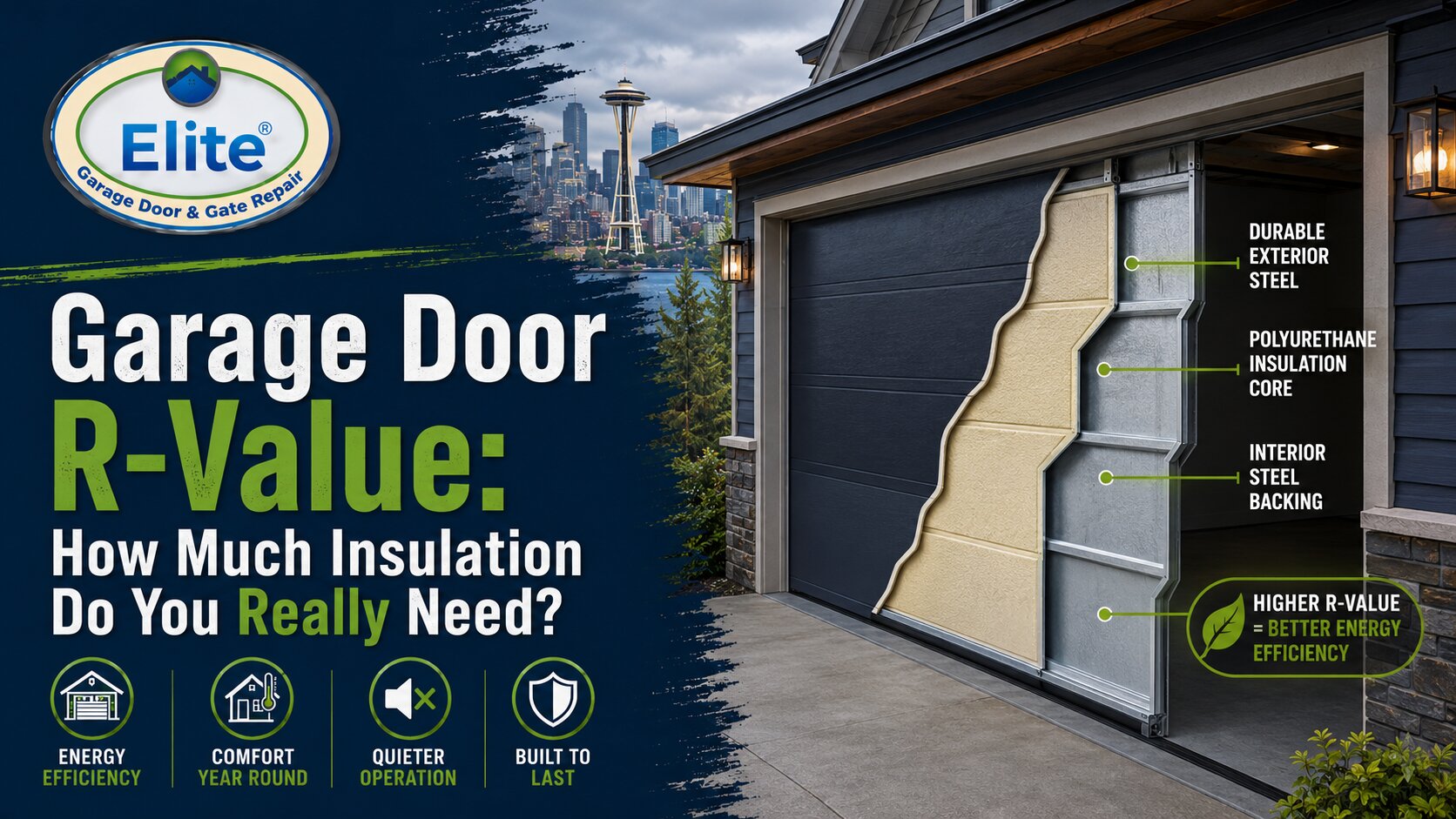
Over the years working with Seattle homeowners, I’ve noticed that R-value is one of the most misunderstood aspects of garage doors. People see the numbers on spec sheets and assume higher is always better, but the reality is more nuanced than that.
As the owner of Elite Garage Door & Gate Repair of Seattle, I’ve helped hundreds of families make smart decisions about garage door insulation. Let me break down what R-value actually means and how it applies to your specific situation.
R-value measures thermal resistance, which tells you how well a material resists heat flow. The higher the R-value, the better the insulation performance.
For garage doors, R-values typically range from R-0 (no insulation) to R-18 or higher. Most residential garage doors fall between R-8 and R-16.
Here’s what really matters: R-value only makes a significant difference if your garage is attached to your home or if you spend time in the garage. If you have a detached, unheated garage where you just park your car, investing in high R-value doors provides minimal benefit.
How R-Value Is Measured in Garage Doors
Not all R-value claims are created equal, and this is where things get tricky. Some manufacturers measure the R-value of just the insulation material itself, while others measure the door as a complete system.
We’ve seen doors advertised with impressive R-values that don’t account for thermal bridging. This happens when metal components create pathways for heat transfer, reducing the door’s actual thermal performance.
The most accurate measurement is whole-door R-value, which accounts for all components including panels, frames, and seals. When comparing doors, make sure you’re looking at Insulated Vs Non-Insulated Garage Doors with apples-to-apples measurements.
What R-Value Do Seattle Homeowners Actually Need?
If your home office, gym, or workshop is in the garage, I recommend bumping up to R-16. The extra insulation makes a noticeable difference in comfort when you’re spending hours in the space.
Insulation Types: Polyurethane vs Polystyrene
In my experience serving neighborhoods from Ballard to West Seattle, polyurethane doors hold up better in our damp climate. The bonded construction adds structural strength and helps prevent moisture issues related to Seattle Weather And Garage Door Performance.
Beyond R-Value: Other Insulation Benefits
Does Higher R-Value Save Money on Energy Bills?
This is the question I hear most often, and the honest answer is: it depends. If you have an attached garage with a living space above it or rooms that share walls with the garage, better insulation absolutely reduces your heating and cooling costs.
For homes in King County with bedrooms over the garage, we’ve seen families notice a real difference in comfort and energy bills after upgrading to R-12 or higher doors. The garage acts as a buffer zone instead of a thermal liability.
However, if your garage is detached or you keep it unheated, the energy savings are minimal. In those cases, choose your door based on durability and Garage Door Safety rather than maximum R-value.
Making the Right Choice for Your Home
R-value is just one factor in choosing the right garage door for your Seattle home. We always consider your specific situation: garage location, how you use the space, your budget, and what matters most to you.
I’ve learned that the best garage door isn’t always the one with the highest specs. It’s the one that matches your actual needs and provides years of reliable performance.
If you’re considering a New Garage Door and want honest advice about insulation levels, our team at Elite Garage Door & Gate Repair is here to help. We’ll assess your home and recommend the R-value that makes sense for your situation, not just try to sell you the most expensive option. Give us a call, and let’s find the perfect door for your home.