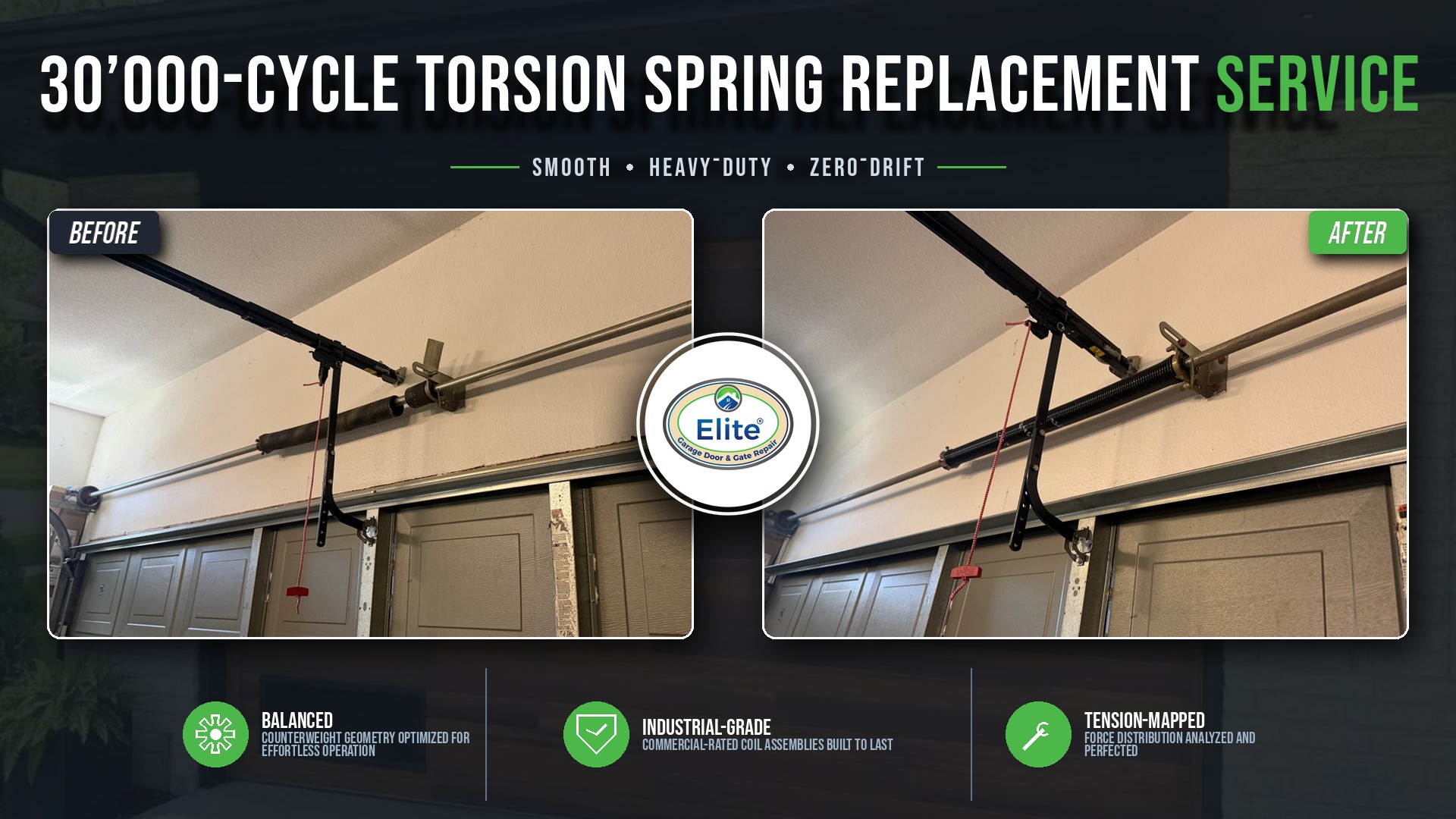


When a garage door spring breaks, the first concern is usually getting the door working again safely. The second concern is cost. Homeowners want a clear number, but spring replacement pricing is not one flat rate because the job is not one single part.
The final cost depends on the type of spring system, the size and weight of your door, whether one or two springs are being replaced, and what condition the rest of the lift system is in.
That said, you can still understand spring replacement pricing in a practical way if you know what drives the cost and what a fair quote typically includes. The goal is not just to pay the lowest amount. The goal is to pay for a repair that restores safe balance and prevents a repeat failure or opener damage.
In most markets, garage door spring replacement is quoted as a bundled service rather than a simple part swap. That bundle typically includes labor, springs, balancing, and safety checks. The range can be wide, but homeowners usually see pricing fall into a few common buckets.
If you have a standard residential door and need torsion spring replacement, the cost often lands in the mid-hundreds, and it can rise depending on door size, spring cycle rating, and whether both springs are replaced. Higher-cost quotes usually reflect heavier doors, specialty springs, or additional required adjustments.
The biggest mistake homeowners make here is comparing quotes without comparing what is actually included. Two quotes can look different on paper even when they are not describing the same scope.
If you want a service reference that aligns with spring replacement work, this page is the most direct internal resource: Garage Door Spring Repair

What Determines The Cost More Than Anything Else
The price of spring replacement is driven by a few factors that matter more than the rest. Once you know these, most quotes make sense.
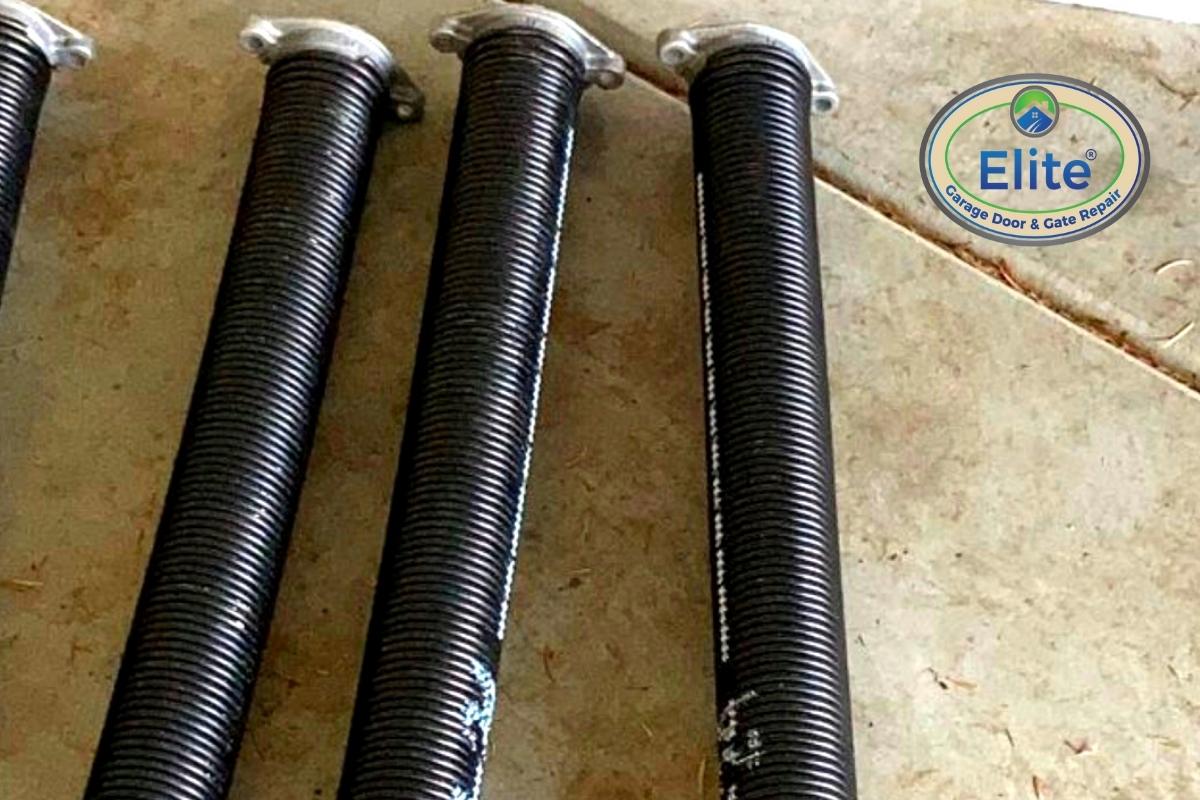
Broken Springs
What A Professional Quote Should Include
A proper spring replacement is not just replacing a broken spring. It is restoring a balanced door system. A fair quote typically includes key steps that protect you after the repair is complete.
A professional spring replacement usually includes:
If you want a clearer explanation of what spring repairs should include, this FAQ breaks it down in simple terms: Spring Repairs For Damaged Garage Doors
Why Very Cheap Quotes Often Become More Expensive Later
It is tempting to choose the cheapest quote, especially when you are dealing with an unexpected repair. The problem is that low pricing often means shortcuts. The most common shortcuts include incorrect spring sizing, replacing only one spring on a two-spring door when both should be replaced, skipping balance testing, or ignoring worn components that will damage the new springs.
A cheap spring replacement can also create opener problems. If the door is left slightly heavy, the opener strains every cycle. That can lead to burned motors, stripped gears, and full opener replacement.
If you suspect your opener has been strained due to spring issues, this page is relevant: Garage Door Opener Repair
Even beyond the opener, lack of routine care can shorten spring life. A door that runs rough due to dry rollers, dirty tracks, or worn bearings places more stress on the spring system. This is why maintenance is not just about noise. It is about lifespan.
Regular Garage Door Maintenance can reduce wear on springs and improve door balance over time.
How To Get The Most Accurate Estimate For Your Door
The most accurate spring replacement estimate is based on your actual door size, weight, and spring configuration. If a company quotes without asking basic questions or inspecting the system, they may be guessing. That is how homeowners get surprised with add-ons later.
A reliable technician will confirm spring type, door height, and whether the door uses one or two springs. They will also check for related issues such as cable wear, drum alignment, or bearing condition.
Those items may not always require replacement, but they should be inspected because they can affect the success of the spring repair.