

When a garage door spring breaks, most homeowners are not only worried about safety, they are worried about time. Cars may be trapped inside, schedules are disrupted, and the garage door suddenly becomes the most inconvenient part of the house. One of the first questions people ask is simple and reasonable: how long does garage door spring replacement actually take?
The good news is that spring replacement is usually not an all-day job. In most cases, it can be completed relatively quickly by an experienced technician. The exact time depends on the type of spring system, the condition of the door, and whether additional adjustments or repairs are needed to restore proper balance.
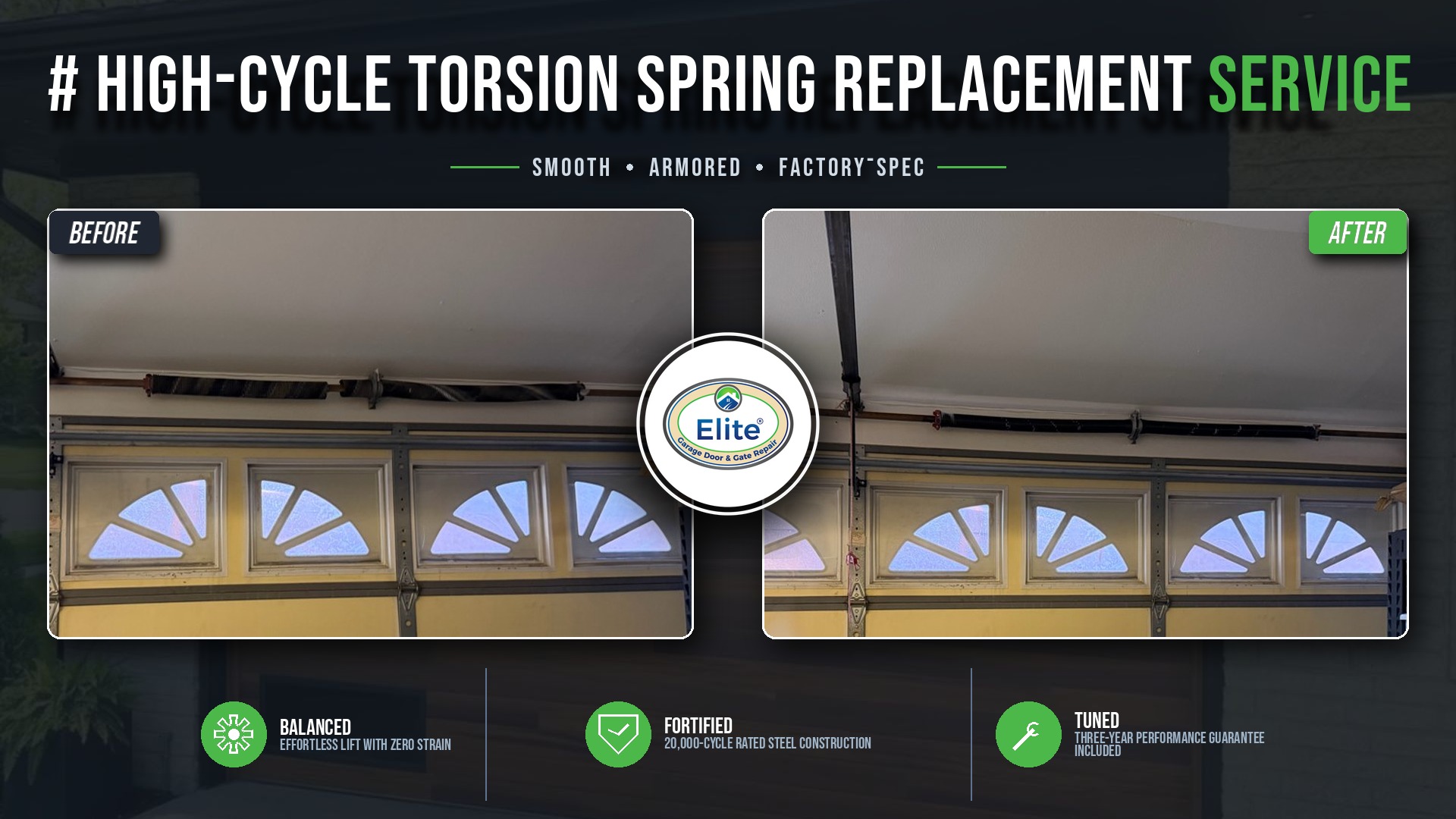
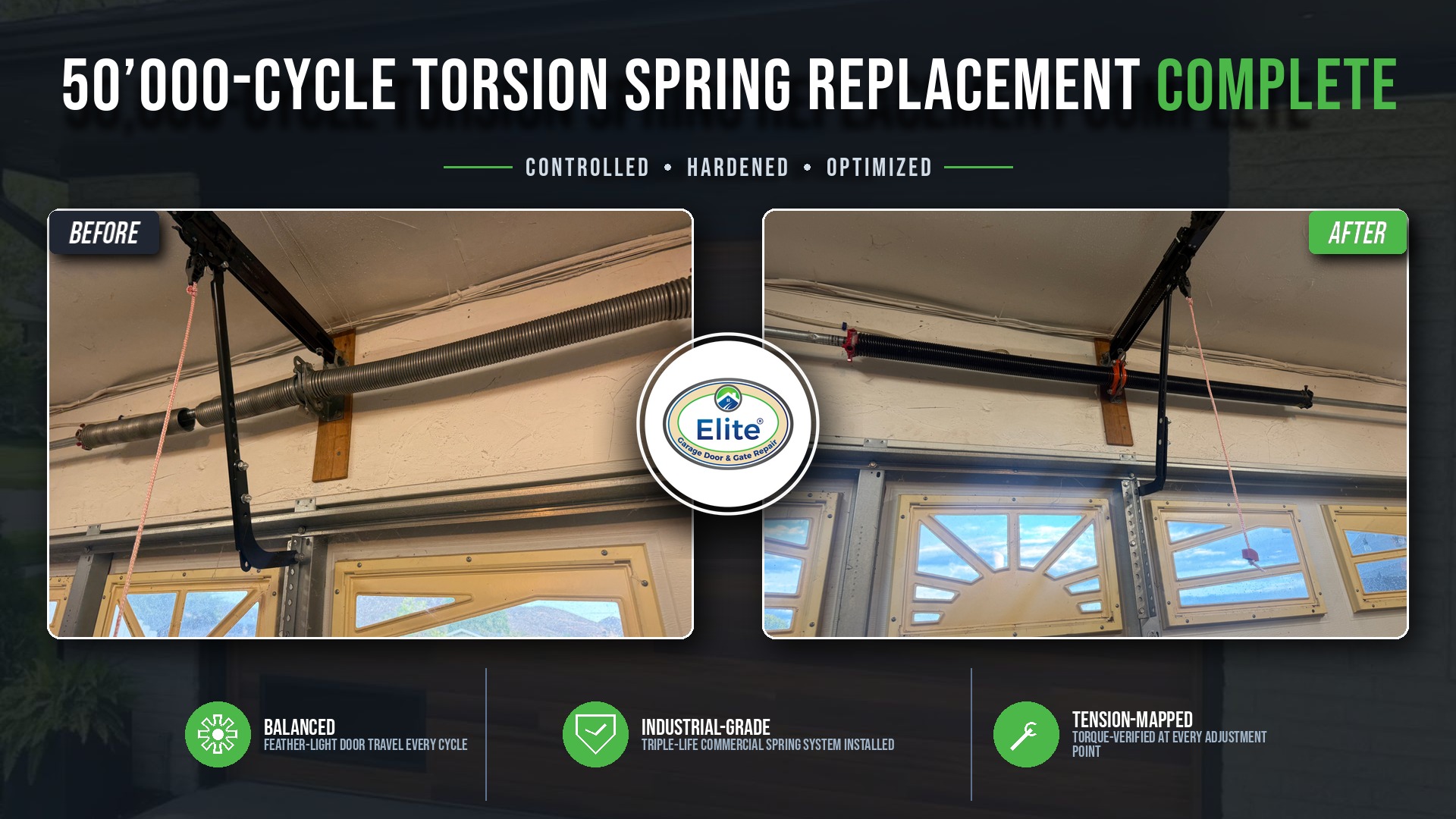
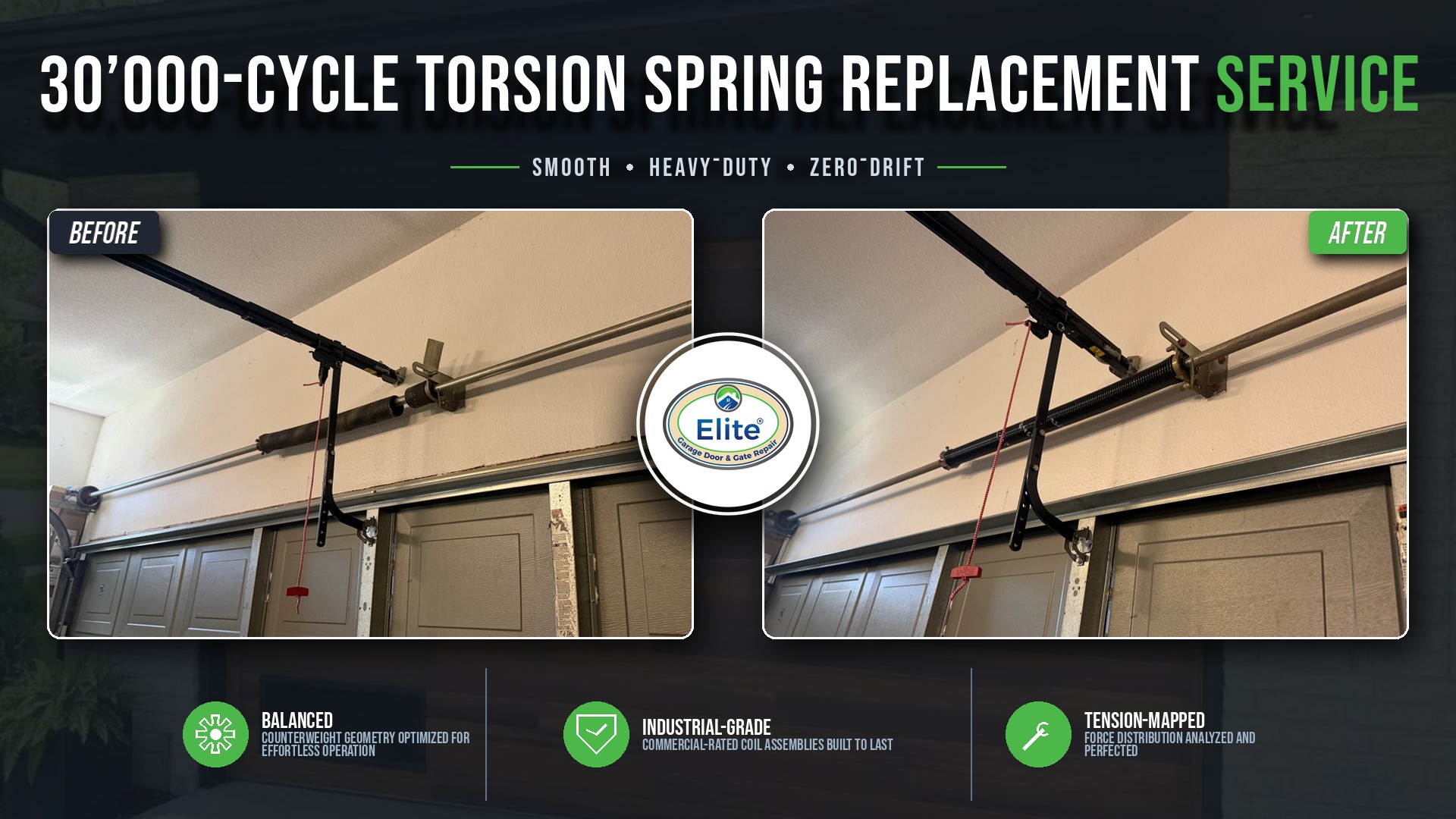
For a standard residential garage door with a torsion spring system, spring replacement often takes about one to two hours from start to finish. This includes safely removing the broken spring, installing the new spring or springs, setting the correct tension, and testing the door for proper balance and operation.
Extension spring systems can sometimes be completed a bit faster, but that is not always the case. Older systems, limited access, or safety cable adjustments can add time. What matters most is not speed alone, but accuracy. A rushed spring job that skips balance testing or proper inspection can create problems that show up days or weeks later.
If you want to see what spring service typically covers, this page provides a clear reference: Garage Door Spring Repair

The Typical Timeframe For Most Spring Replacements
What Can Make The Job Take Longer Than Expected
While many spring replacements are straightforward, certain factors can extend the time needed to do the job correctly.
Understanding spring setups helps explain why time can vary. This article gives useful background: One Spring Vs Two Springs
Why Proper Balancing And Testing Matter More Than Speed
Some homeowners assume that once the new spring is installed, the job is done. In reality, installation is only part of the process. Proper balancing and testing are what make the repair successful.
After spring installation, the technician should disconnect the opener and test the door manually. The door should lift smoothly and stay in place when opened halfway. If it drifts up or falls down, the tension needs adjustment.
Skipping this step or rushing through it can leave the door slightly heavy or overly aggressive. That imbalance puts extra strain on the opener and increases the risk of future problems.
If the door still feels heavy after spring replacement, it is often a sign that balance or sizing needs correction. This topic explains that situation in more detail: Garage Door Feels Heavy After Spring Replacement

Why Proper Balancing And Testing Matter More Than Speed
How Emergency And After-Hours Service Affects Timing
If the spring breaks late at night and the door is stuck closed, the safest option may be to wait until regular service hours unless there is an urgent need to open the door. Forcing the door open or repeatedly using the opener often creates more damage and adds to repair time later.
If you are dealing with an urgent situation where the door cannot be secured or accessed, emergency service may be appropriate: Emergency Garage Door Service
What You Can Do To Help The Repair Go Smoothly
Long term, routine Garage Door Maintenance can reduce friction and wear, which helps springs last longer and keeps future repairs straightforward.