
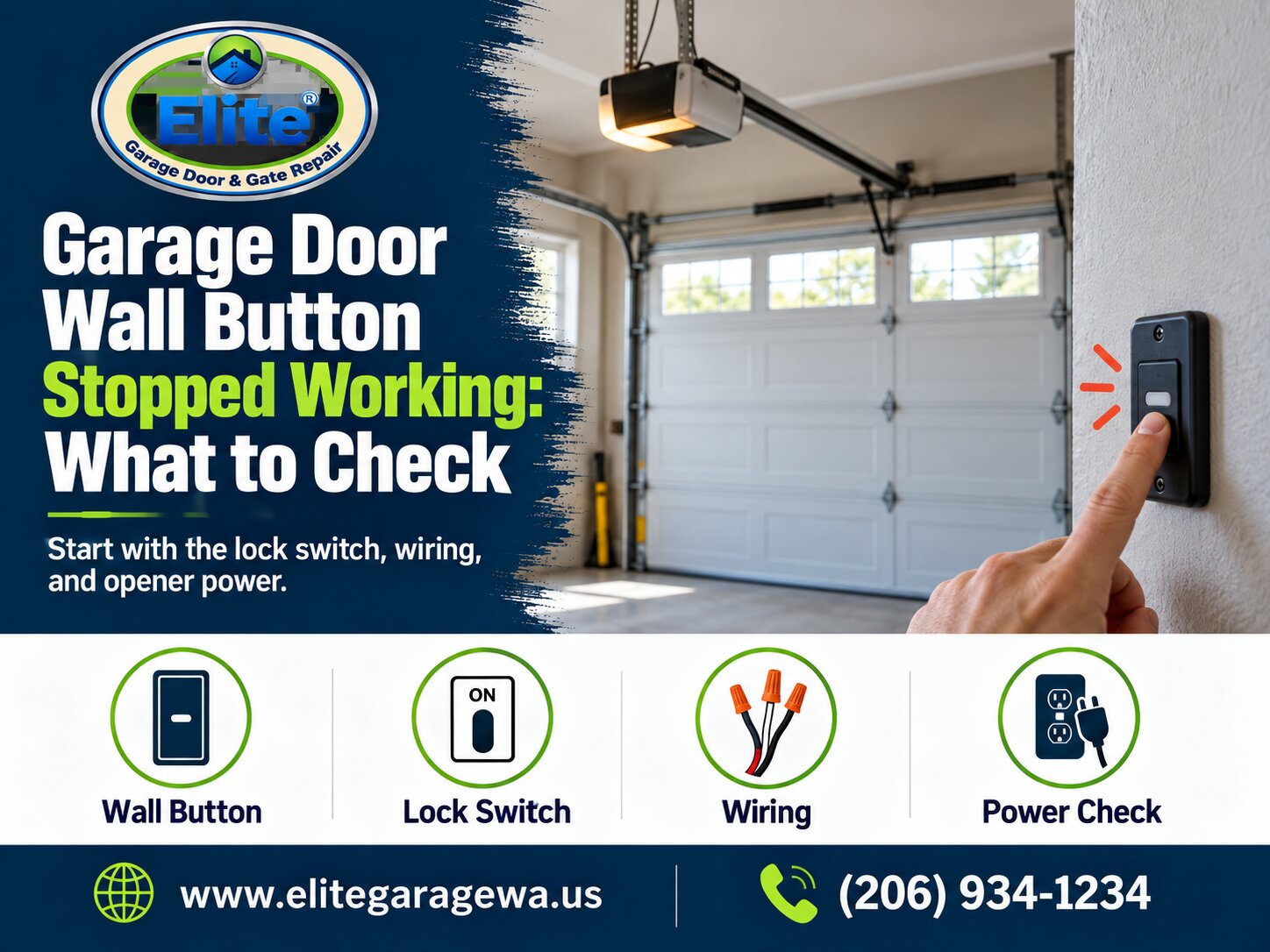
When your wall button stops working, the problem is usually a loose wire connection at the button or opener terminal, a failed button unit, or a break in the low-voltage wire running between them. Most of these issues are safe for homeowners to inspect and often take just a few minutes to fix.
Wall button failures are straightforward to diagnose because they isolate to a specific circuit. In most cases, the fix is simpler than you think, and the safe checks you can perform before calling for help will often identify the exact cause.
Why Did My Wall Button Stop Working?
Wall buttons operate on low-voltage circuits, typically 24 volts or less. The button itself is just a momentary switch that completes the circuit when pressed, signaling the opener to run. When that signal doesn’t get through, the opener won’t respond.
Common causes include corroded wire terminals, a button worn out from years of use, or physical damage to the wire inside the wall. If your remote still works but the wall button doesn’t, the problem is isolated to the button circuit, not the opener itself. For broader troubleshooting when neither responds, see our guide on Garage Door Opener Not Responding: What To Check First.
What Should I Check First?
Start with these homeowner-safe steps:
If a spare button works, the original button is faulty and needs replacement. Replacement buttons are widely available and straightforward to install. If the opener still doesn’t respond even with a spare button, the issue lies in the wiring or the opener’s terminal board, and it’s time to call a professional.
When Should I Call a Technician?
If the wiring runs inside walls or through finished ceilings, tracing and repairing breaks requires tools and experience. Similarly, if the opener’s terminal board is damaged or you’re unsure how to safely test connections, a professional can diagnose and repair the issue quickly. We offer comprehensive Opener Repair services throughout the Puget Sound region.
Don’t let a non-working wall button become a daily frustration. Most repairs take less than an hour, and you’ll have the convenience and safety of a fully functional system again. Pacific Northwest humidity and marine air can accelerate terminal corrosion, making periodic inspection a smart preventive step for any garage door system in our region.