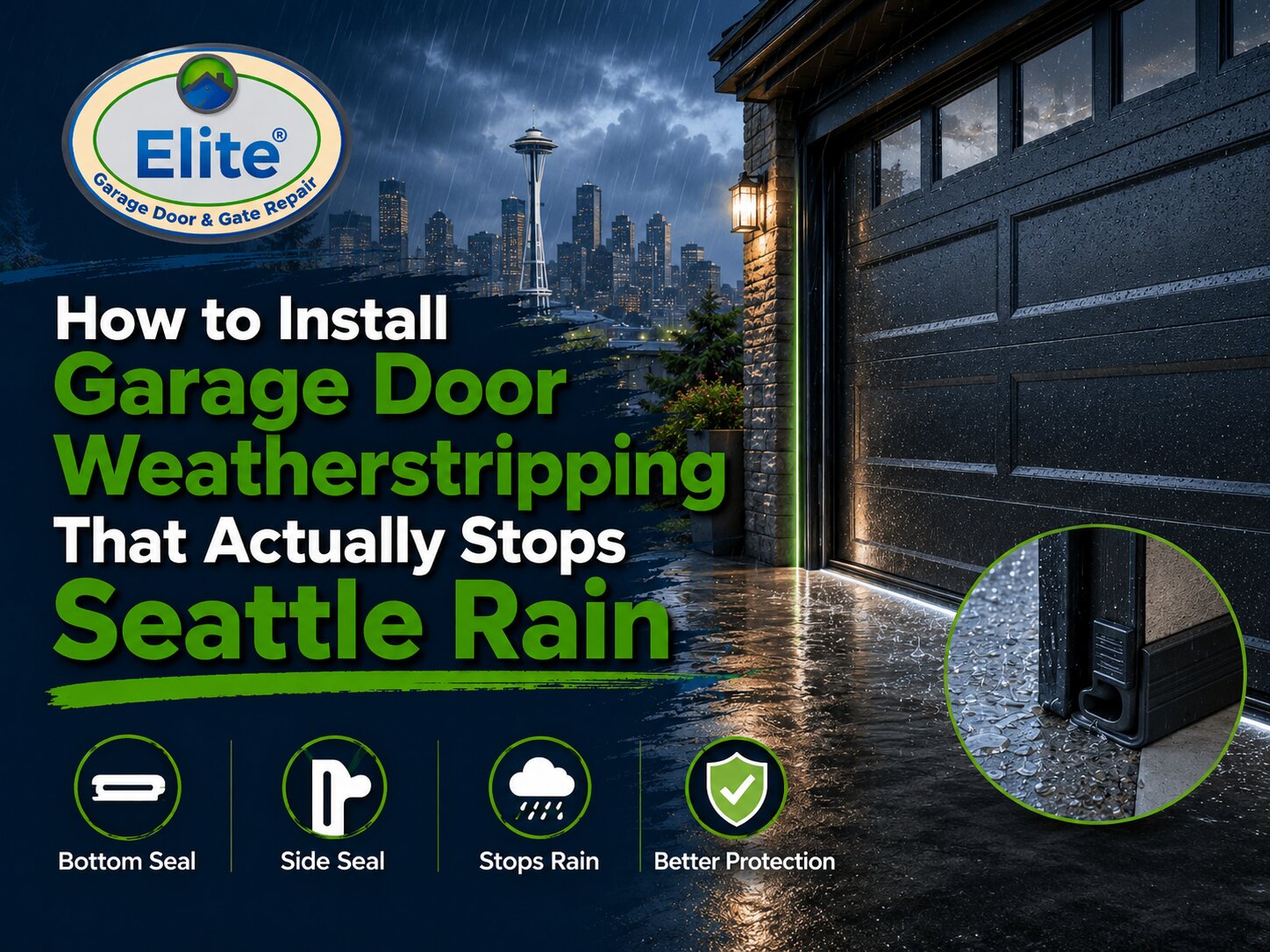

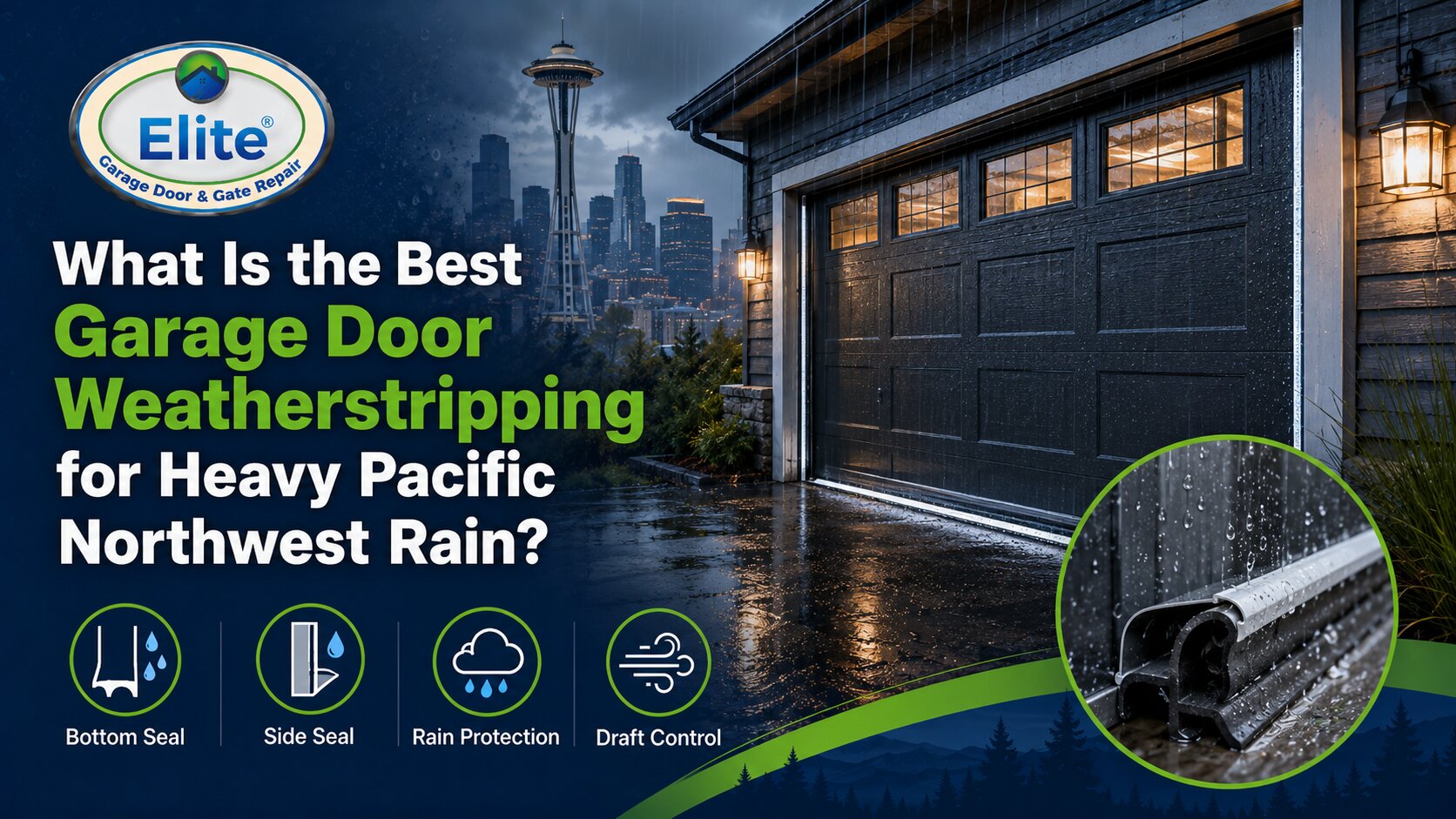
The best garage door weatherstripping for heavy Pacific Northwest rain is EPDM rubber bottom seals combined with vinyl or aluminum track weatherstripping on the sides and top. EPDM (ethylene propylene diene monomer) rubber resists water absorption, stays flexible in cold temperatures, and maintains its seal integrity despite constant moisture exposure common in Seattle and throughout King County. For homes near Puget Sound or in low-lying neighborhoods like Ballard and West Seattle, a bulb-style EPDM bottom seal provides superior water resistance compared to basic vinyl or foam alternatives.
Pacific Northwest weather demands weatherstripping that can handle not just occasional rain, but sustained moisture, temperature fluctuations, and the marine air that accelerates material degradation. Standard garage door seals often fail within two to three years in Seattle’s climate, while commercial-grade EPDM systems can last seven to ten years. Elite Garage Door & Gate Repair of Seattle (WA License #ELITEGD8339J) regularly replaces failed weatherstripping on homes throughout the region and consistently recommends EPDM-based solutions for long-term performance.
Different weatherstripping materials perform differently under constant rain exposure. Understanding the options helps you select the right solution for your specific garage door configuration and location.
Bottom Seal Styles and Their Performance in Heavy Rain
The bottom seal carries the heaviest responsibility in blocking water intrusion. Several distinct styles address different challenges presented by Seattle’s persistent rainfall.
Installation Considerations for Maximum Water Protection
Even premium weatherstripping fails if installed incorrectly. Proper installation requires attention to several critical details specific to wet-climate performance.
Bottom seal height adjustment determines how well the seal blocks water without creating excessive friction. The seal should compress about one-third to one-half of its height when the door closes. Too little compression allows water through, while too much creates drag that strains the opener and accelerates seal wear. Professional installation ensures proper compression across the entire door width.
Side and top seal alignment must account for door panel movement. As garage doors age, panels can warp slightly or shift position, creating gaps where wind-driven rain penetrates. Quality weatherstripping accommodates minor misalignment, but significant panel issues require correction before new seals will perform effectively, especially when planning upgrades discussed in guides like How To Choose The Best Garage Door For Your Detached Garage.
When to Replace Weatherstripping on Seattle Garage Doors
Regular inspection helps catch weatherstripping failure before water damage occurs. Look for these common signs that replacement is overdue:
Pacific Northwest homeowners should inspect weatherstripping at least twice yearly, ideally before and after the wettest winter months. Catching deterioration early prevents the water damage, concrete staining, and pest issues that result from failed seals.
Elite Garage Door & Gate Repair of Seattle provides professional weatherstripping replacement throughout the greater Seattle area, ensuring proper material selection and installation for lasting performance. Visit elitegaragewa.us to learn more about weatherstripping options, or call (206) 934-1234 to schedule an inspection and get expert recommendations tailored to your garage door and neighborhood conditions.