
Over the years working with Seattle homeowners, I’ve learned that most people don’t think about their garage door track system until they need more ceiling space or want to install a car lift. That’s when I get the call asking if their current setup can be modified. The truth is, the type of track system you have makes a huge difference in how your garage functions and what you can do with the space.
Understanding the three main track configurations can save you from costly mistakes and help you make the right choice whether you’re building new or upgrading. Let me walk you through what I explain to customers here in Seattle every week.
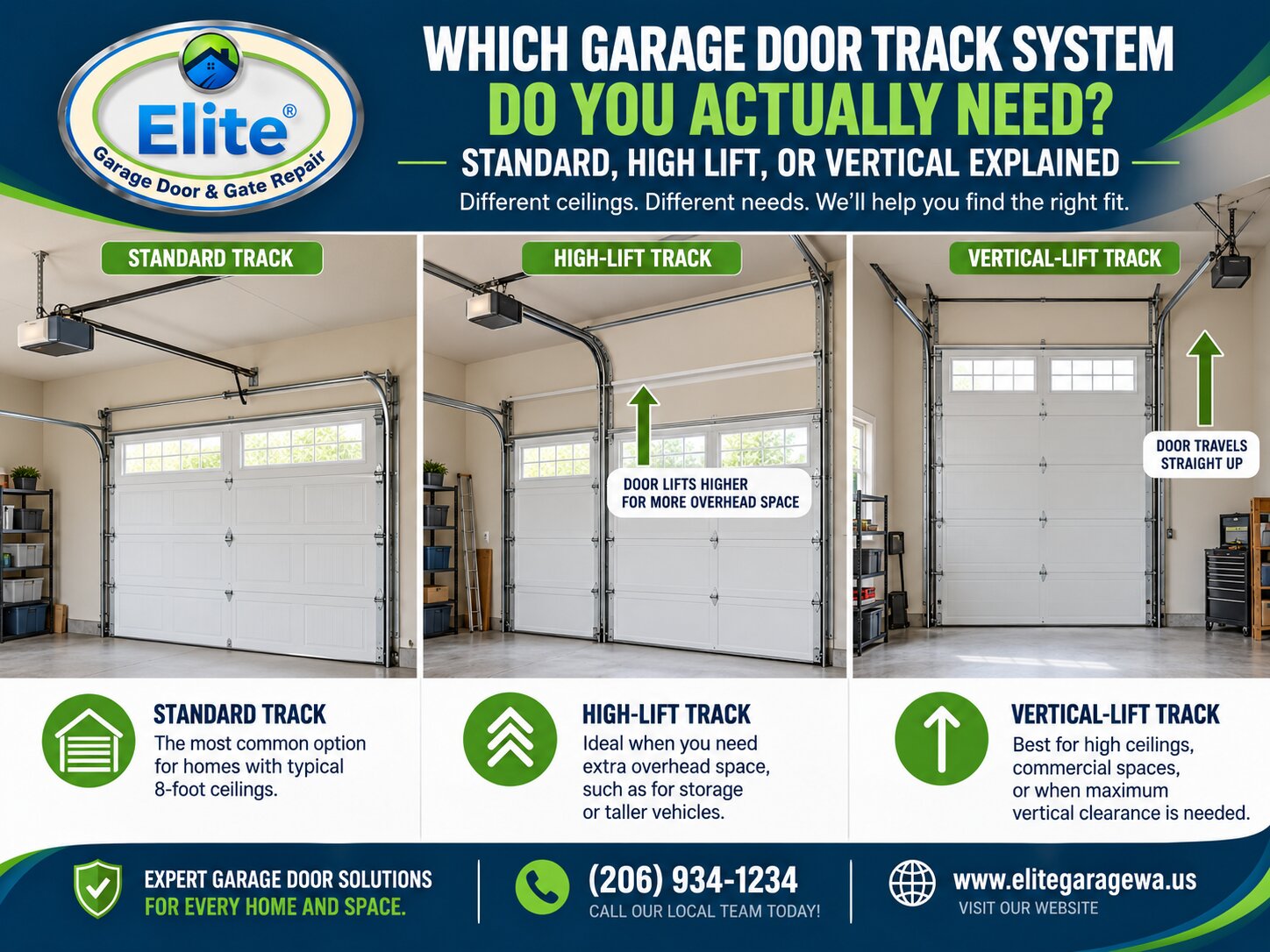
Standard lift is the most common track system I install in residential garages across King County. The door travels straight up about 12 inches, then curves back to run parallel with the ceiling. This system requires minimal headroom, typically just 10 to 12 inches above the door opening.
I recommend standard lift for most homes in neighborhoods like Ballard and Fremont where garage ceilings are around 8 feet high. It’s cost-effective, reliable, and works perfectly if you’re not planning to use the ceiling space for storage or equipment.
The biggest limitation? You lose ceiling clearance right where you might want it. If you’re thinking about overhead storage racks or a ceiling-mounted bike system, standard lift might not give you enough room.
High Lift Track Systems: When Do You Need the Extra Space?
High lift tracks allow your garage door to travel higher up the wall before transitioning to horizontal. Instead of curving at 12 inches, the door might go 24, 36, or even 48 inches up depending on your ceiling height and needs.
I install high lift systems frequently in West Seattle and Magnolia homes where homeowners want to maximize their garage space. This configuration is perfect if you’re adding storage systems, want to park a tall vehicle, or plan to install a car lift.
The trade-off is cost and complexity. High lift requires additional hardware, taller vertical tracks, and sometimes longer springs. In my experience, it adds roughly 20 to 30 percent to the installation cost compared to standard lift, but the functional benefits often justify the investment.
Understanding Vertical Lift Track Configuration
Vertical lift is the system I recommend least often for residential applications, but it’s incredibly useful in specific situations. The door travels straight up with no horizontal curve at all, running vertically along the back wall.This setup works best when you need maximum ceiling clearance throughout the entire garage. I’ve installed vertical lift in converted garages in Capitol Hill and Queen Anne where homeowners transformed the space into workshops or studios and needed every inch of overhead space.
Vertical lift requires the most headroom of all three systems, often needing 18 to 24 inches or more. It’s also the most expensive option due to the specialized hardware and counterbalance requirements.
How Do Seattle Weather Conditions Affect Track Choice?
I’ve seen plenty of track problems in Seattle garages caused by expansion and contraction during our mild winters and occasional cold snaps. Proper installation with correct clearances matters more than the track type itself when it comes to weather resistance.
Can You Switch Track Types on an Existing Door?
Yes, but it’s not always straightforward. I’ve converted dozens of standard lift systems to high lift for homeowners who initially didn’t think they needed the extra space. The door itself can often be reused if it’s in good condition.
However, you’ll need new tracks, different spring configurations, and possibly new cables. The entire counterbalance system needs recalculation because the door’s weight distribution changes with different track geometry. This is definitely not a DIY project.
Making the Right Track Decision for Your Seattle Garage
The track system you choose should match both your current needs and future plans for the space. I always ask my customers in Washington how they use their garage beyond parking.
Are you a cyclist who needs ceiling hooks? Planning to add a workbench?Considering a vehicle lift someday?
Standard lift handles everyday needs beautifully and keeps costs reasonable. High lift opens up possibilities for better space utilization. Vertical lift solves specific challenges when ceiling clearance is absolutely critical.
If you’re unsure which track configuration makes sense for your garage, our team at Elite Garage Door & Gate Repair is happy to assess your space and explain your options. We’ll measure your headroom, discuss how you use the garage, and help you make a decision you’ll be satisfied with for years. Give us a call, and we’ll figure out the best solution together.