



Most garage doors don’t fail because one big thing suddenly breaks out of nowhere. They fail because friction slowly builds up until the system starts fighting itself. That’s why lubrication is one of the simplest, most effective ways to keep a garage door quiet, smooth, and reliable over time.
But lubrication is also one of the most misunderstood maintenance tasks. People either skip it entirely, or they spray the wrong product everywhere and actually make things worse by attracting dirt and creating sticky buildup. Done correctly, lubrication reduces wear on rollers, hinges, bearings, and springs, and it helps your opener avoid unnecessary strain.
Below is the practical, homeowner-friendly way to lubricate your garage door safely and correctly.
Table of Contents
Why Lubrication Matters More Than You Think
Your garage door is a moving system under load. Every time it opens and closes, rollers travel along tracks, hinges pivot, bearings rotate, and springs flex under tension. Without lubrication, these parts create metal-on-metal friction. That friction turns into noise, resistance, and wear.
The cost of friction is not just sound. It can shorten the life of:
- rollers and hinges
- bearings and springs
- cables (indirectly, due to uneven movement)
- the opener motor and gears
Lubrication is one of those rare maintenance tasks that benefits the entire system at once.
If you want the full system approach beyond lubrication alone, this page supports that routine: Garage Door Maintenance

When You Should Lubricate Your Garage Door
For most homes, lubricating the moving parts every few months is enough, and a more thorough check twice a year keeps the system running smoothly. If your garage door is used heavily, or if you notice it getting louder, you may need lubrication more often.
You should lubricate sooner if:
- the door starts squeaking or grinding
- the opener begins sounding strained
- the door feels less smooth during travel
- you notice dry hinges or rollers
- winter or wet weather makes movement rougher
Lubrication is especially important in damp conditions because moisture can accelerate rust, which increases friction. If you want extra protection against corrosion, this post fits this topic well: How To Protect Your Garage Door From Rust And Corrosion
What To Lubricate (And What Not To Touch)
The safest way to lubricate is to focus only on parts that actually move and benefit from reduced friction.
Lubricate these parts:
- roller bearings (not the roller track itself)
- hinge pivot points
- end bearings and center bearing (if accessible)
- torsion springs (a light coat to reduce friction and rust)
- the opener rail in some cases, depending on the system
Do not lubricate:
- the tracks heavily (they should stay clean, not greasy)
- the safety sensors
- the belt or chain directly unless your opener manual recommends it
A track covered in grease becomes a dirt magnet. Dirt and grit create the exact friction you were trying to remove, so it backfires over time.
If your rollers are worn or noisy even after lubrication, you may be dealing with rollers that are simply at the end of their life. In that case, this service page is the correct next step: Replacement Rollers
How To Lubricate Properly Without Making A Mess
Start with the door closed. That gives you stable access to hinges and rollers.
Step-by-step:
- Wipe off visible dirt and old buildup with a rag
- Apply lubricant lightly to hinge pivots and roller bearings
- Apply a light coat to the spring surface if you have a torsion system
- Open and close the door a few times to distribute lubricant
- Wipe away excess so it does not drip or attract dust
The goal is not to soak everything. The goal is to reduce friction at the contact points.
If you’re unsure whether your door uses torsion springs or extension springs, this guide explains the difference clearly: Torsion Springs Vs Extension Springs
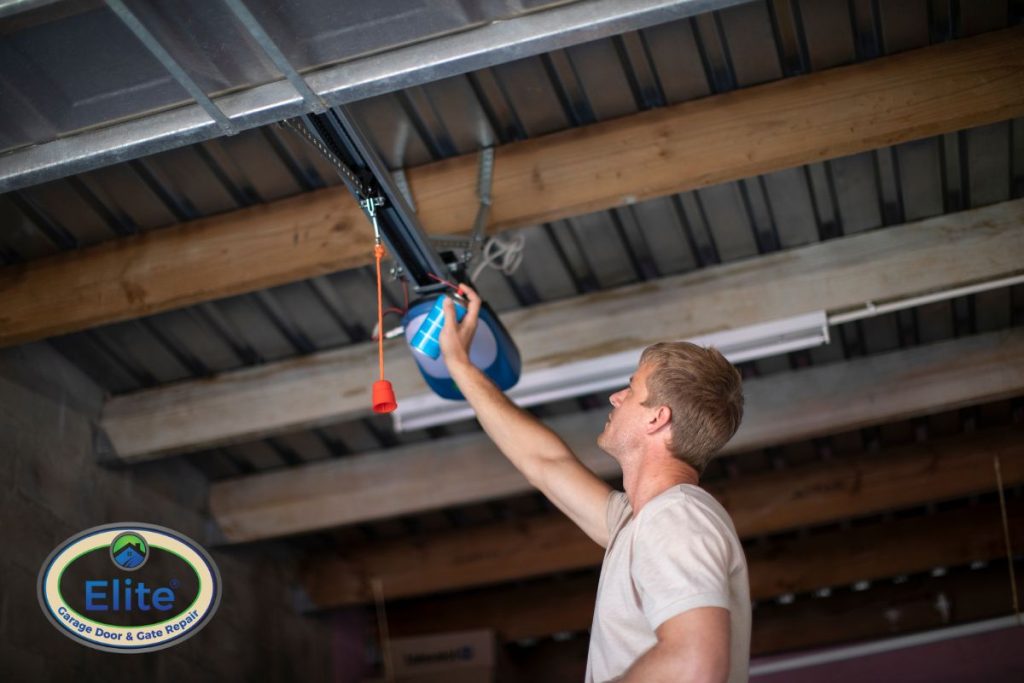
Lubrication Plays A Bigger Role Than Most People Think
When Lubrication Is Not Enough (And You Need Service)
Lubrication helps when friction is the problem. It will not solve issues caused by worn parts, bad balance, or spring fatigue.
If your door feels heavy, does not stay balanced halfway, or the opener struggles even after lubrication, springs may be the real issue. Spring problems are not a DIY area. They are high-tension components and should be handled professionally.
If the door feels heavy or unbalanced, the correct service path is: Garage Door Spring Repair
If the door is smooth by hand but the opener still strains, stalls, or behaves inconsistently, opener repair may be required. In that case, use: Garage Door Opener Repair


Leave A Comment