


Garage door springs are one of those parts you rarely think about until the day they stop doing their job. The door that used to glide up smoothly starts feeling a little heavier. The opener seems to work harder than it used to. Then, sometimes without much warning, there’s a loud bang and the door won’t lift. When that happens, homeowners usually ask two questions immediately. How long are springs supposed to last, and did mine fail early?
The truth is that garage door spring lifespan is predictable in theory but variable in real life. Springs are consumable components. They are designed to wear out after a certain number of cycles, not to last forever. Once you understand what a cycle is, how your household uses the door, and what can shorten spring life, you can usually estimate when replacement is likely and reduce the odds of a surprise failure.
Table of Contents
What Spring “Lifespan” Really Means: Cycles, Not Years
When professionals talk about spring lifespan, they are almost always talking about cycle ratings. A cycle is one complete opening and closing of the garage door. If you leave for work in the morning and come back in the afternoon, that’s two cycles. If your family uses the garage as the main entrance, the cycle count climbs fast.
Many standard torsion springs are rated around 10,000 cycles. Some setups use higher-cycle springs rated for 20,000 cycles or more. Those numbers matter because they translate into real-world time depending on usage.
Here’s the simplest way to think about it:
- 2 cycles per day is roughly 10,000 cycles over about 13 to 14 years
- 4 cycles per day is roughly 10,000 cycles over about 6 to 7 years
- 6 cycles per day can bring 10,000 cycles down to around 4 to 5 years
That’s why two neighbors with similar doors can have completely different spring lifespans. One household might use the garage twice a day, while another uses it ten times a day.
If you’re not sure what kind of springs you have, this explanation helps clarify how different spring systems behave and wear: Torsion Springs Vs Extension Springs
What Spring “Lifespan” Really Means Cycles, Not Years
What Actually Shortens Spring Life
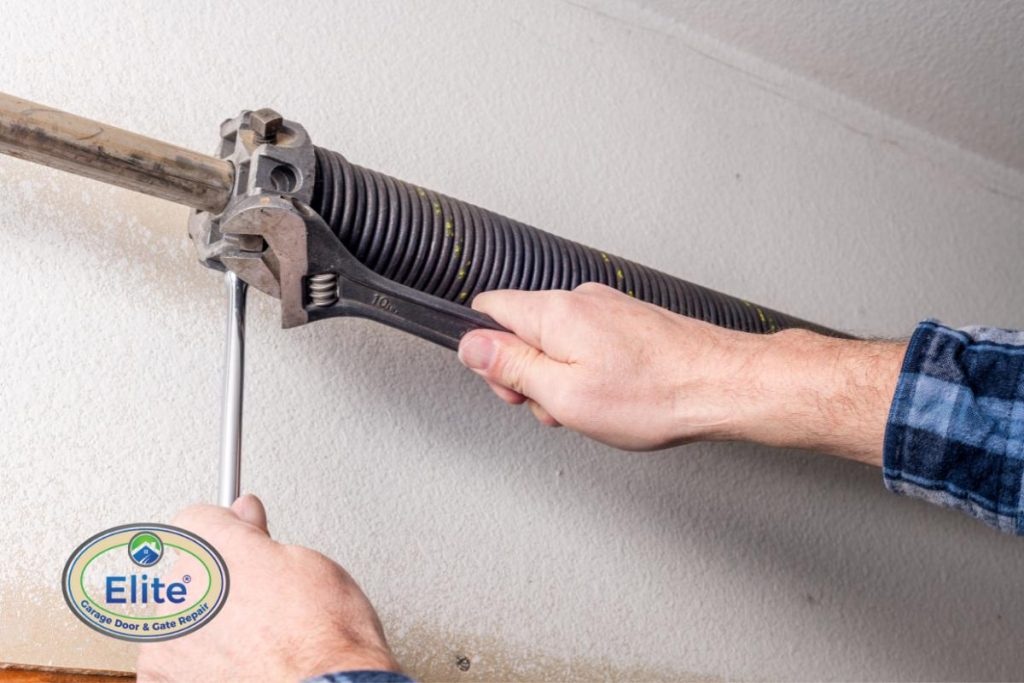
Springs don’t just fail because time passed. They fail because they’ve been flexed and loaded thousands of times. Still, there are several factors that can shorten lifespan, sometimes dramatically.
One big factor is door weight. Heavier doors place more demand on the spring system. Insulated doors, custom wood doors, and taller doors all increase stress. If springs are slightly undersized, they can wear out early because they’re doing more work than they were designed to do.
Another common factor is poor balance. A door that is out of balance forces the spring system to work unevenly. That uneven load can lead to faster fatigue and earlier breakage. The same thing happens if cables, drums, or bearings are worn and the door does not move smoothly.
Climate also plays a role. Moisture and coastal air can contribute to rust and corrosion, which can weaken metal over time. Springs can also dry out if the system is neglected, and friction in the moving parts can cause additional strain that shows up as spring wear sooner than expected.
If you want a practical maintenance approach that supports spring longevity, this is a helpful place to start: Garage Door Maintenance
What Actually Shortens Spring Life
How To Tell If Your Springs Are Near The End
Most homeowners don’t notice spring wear until the door starts “feeling different.” The tricky part is that springs can weaken gradually, while the opener tries to compensate. That’s why many doors still operate until the day the spring finally snaps.
Here are common signs that often show up before failure:
- The door feels heavier when lifted manually
- The opener strains or sounds like it’s working harder
- The door opens slower or seems less smooth
- The door does not stay in place when partially open
- You notice gaps or changes in spring shape on a torsion system
If you want a clear checklist that helps confirm whether your springs are already failing, this guide is useful: 9 Signs Broken Garage Door Springs
If your springs are showing these symptoms, waiting usually doesn’t save money. It tends to increase the chance of a sudden break at an inconvenient time, which often becomes an emergency service call.
Standard Springs Vs High-Cycle Springs: Which One Makes Sense?
Homeowners often ask whether they should upgrade to higher-cycle springs during replacement. In many cases, the answer is yes, especially if the garage is used as the primary entrance.
If your household has multiple drivers, school pickups, frequent errands, or you’re opening the door several times a day, a 10,000-cycle spring can wear out much faster than you expect. Upgrading to a higher-cycle spring can reduce how often you deal with spring replacement, and it can also reduce strain on the opener because the door stays better balanced for longer.
The key is sizing and installation. Even high-cycle springs won’t last if they’re the wrong size for your door or if the system is not balanced properly after installation.
When replacement is needed, your safest next step is professional Garage Door Spring Repair because spring work involves high tension and requires proper tools and calibration.
Standard Springs Vs High-Cycle Springs Which One Makes Sense
How Long Does Replacement Usually “Buy You” And What You Should Expect
After a proper spring replacement, you should expect the door to feel noticeably smoother and lighter. A balanced door should lift with minimal effort when disconnected from the opener, and it should stay in place when left halfway open.
A good spring replacement also includes checking related parts that affect spring life, such as cables, drums, bearings, and alignment. Springs rarely fail in isolation. A door that binds, jerks, or runs unevenly will shorten the life of the new springs too.
If you want to know what is typically included in a proper spring repair and what questions to ask, this FAQ explains it clearly: Spring Repairs For Damaged Garage Doors


Leave A Comment