

In Seattle and King County, garage doors don’t usually suffer from desert heat or constant snow loads, but they do deal with something that quietly wears systems down year after year: moisture. Long wet seasons, damp air, and frequent temperature swings create the perfect conditions for corrosion, especially on the parts most homeowners never look at closely.
Even if your garage door panels still look fine, the hardware behind the scenes can start rusting, stiffening, and adding friction until the door feels rough or the opener begins to strain.
This topic matters in neighborhoods like 98144 because you’re not just dealing with rain. You’re also dealing with persistent humidity, wet debris tracked into the garage, and, depending on the area, some marine air influence from Puget Sound that can accelerate surface corrosion over time. The goal is not to fear rust. The goal is to reduce it early so your door keeps operating smoothly.
Why Seattle’s Climate Is Tough On Garage Door Hardware
Moisture is the main driver. When metal stays damp for long periods, corrosion develops faster. Springs, hinges, rollers, track bolts, and brackets are all vulnerable. Rust does not just look bad. It creates friction, and friction makes everything work harder.
There are three common Seattle-specific patterns:
Springs are especially sensitive to corrosion because small weak spots in the metal can shorten cycle life. If you notice rust building on spring coils or the door begins feeling heavier, don’t wait for a snap. The correct step is Garage Door Spring Repair.
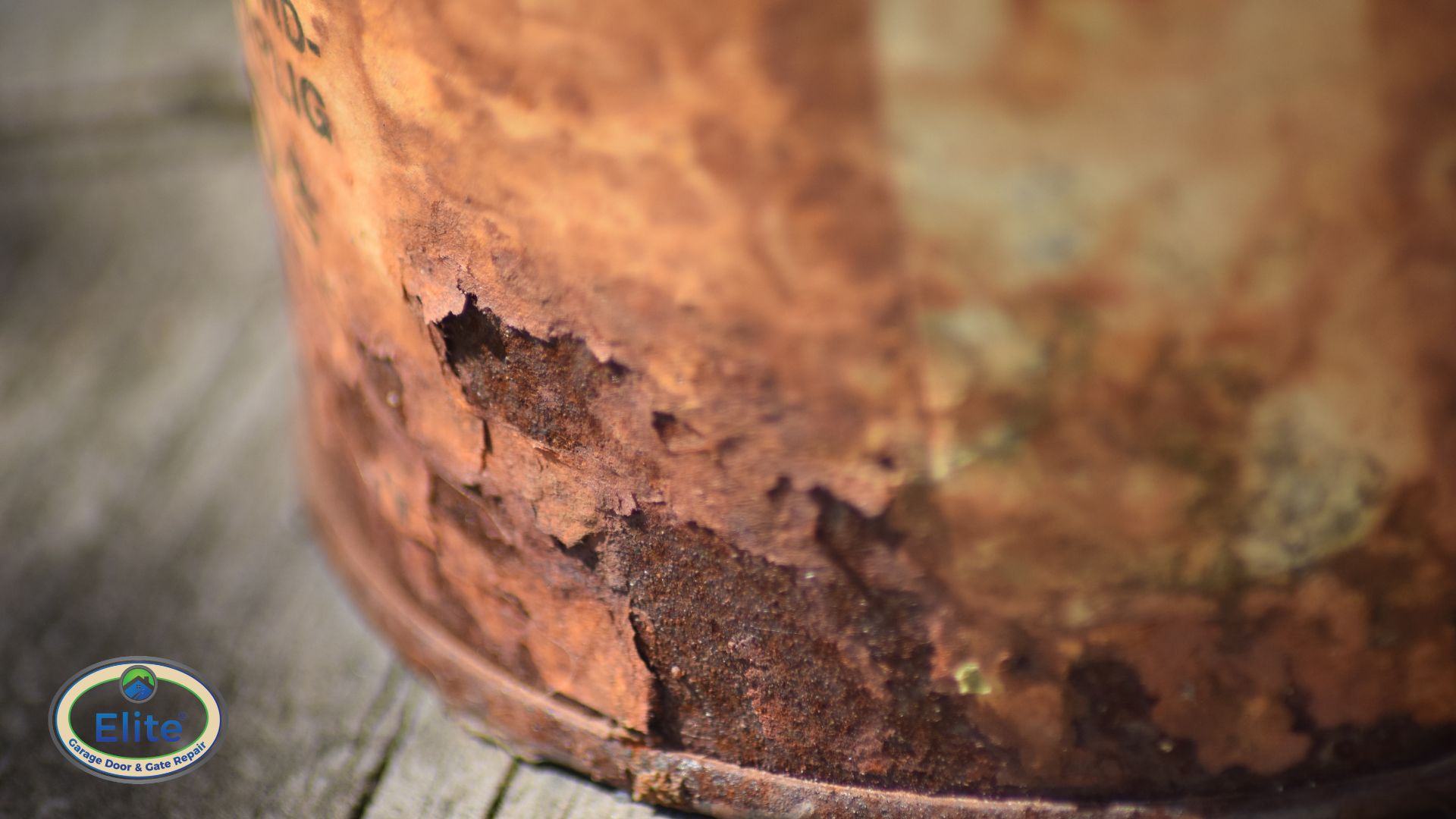
Where Rust Usually Starts In King County Garages
Rust tends to start where moisture collects and lingers.
Bottom brackets and lower hinges are common starting points because they sit closest to damp floors and splash zones. Roller stems also show corrosion early because they experience movement and moisture at the same time. Track hardware can rust along bolts and brackets, and once rust starts there, it often loosens connections and creates subtle alignment shifts.
The early signs are usually small:
If rollers are worn or corroded, they may stop rolling cleanly and start dragging. That creates noise, vibration, and extra strain. If you suspect roller wear, this is the most direct fix: Replacement Rollers.
How Moisture Damage Shows Up As Opener Problems
A lot of homeowners think their opener is failing when the real issue is friction. Corrosion increases resistance, and the opener has to fight that resistance every cycle. Over time, the opener becomes louder, slower, and more likely to reverse or stall.
If you’re seeing opener strain and the door movement feels rough, the root cause may be corrosion and resistance, not electronics. If the opener is already struggling or behaving inconsistently, this is the correct service path: Garage Door Opener Repair.
But opener repair alone won’t last if the door hardware continues dragging. You have to reduce friction at the source.
Practical Seattle-Friendly Ways To Slow Rust
In King County, the best strategy is consistent prevention, not one-time fixes.
A practical routine includes:
- wiping down lower hardware occasionally during the wet season
- keeping the area near the threshold clean so wet debris doesn’t sit under the door
- lubricating moving parts correctly to reduce friction and protect metal surfaces
- watching for early corrosion on springs and fasteners
If you want a detailed guide focused on rust prevention methods that apply here, this is your best internal reference: How To Protect Your Garage Door From Rust And Corrosion
For the full system approach that ties prevention together, use Garage Door Maintenance.